Quality discipline

Specification-led communication for serious dried fruit buyers

Atlas Global Trading Co. presents quality information in the format professional buyers usually review first: origin, technical profile, microbiology, moisture, packing structure, documentation flow and commercial readiness. The objective is to reduce ambiguity and make it easier for importers, distributors, industrial users and private label buyers to evaluate fit before moving to order stage.

This page is designed to support B2B procurement discussions, not generic marketing. It focuses on the product and shipment details that influence approval, quotation, production planning and destination-market acceptance.

Specification FocusTechnical-first communication
Export ReadyPacking and documents aligned
Organic & NaturalDual sourcing approach
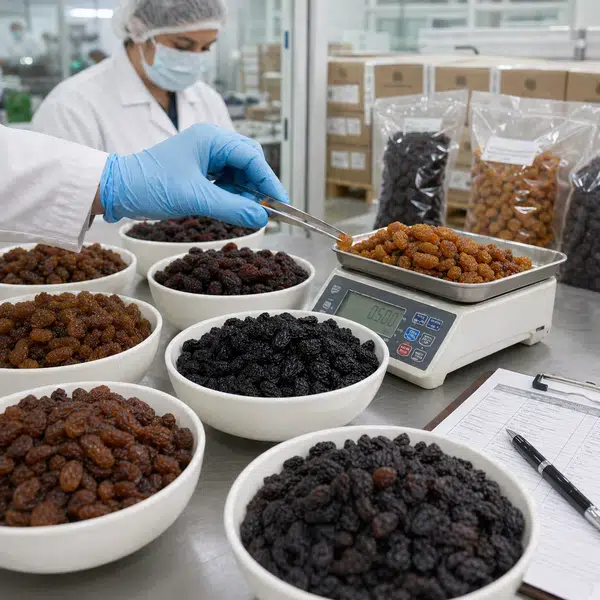
Specification-led communication for serious buyers

What buyers usually expect from a quality page

In dried fruit export, quality communication is not only about saying that a product is good. Buyers need structured information they can compare against their own internal specifications, food safety requirements, customer standards and packing models.

Technical clarity

Procurement and quality teams typically review moisture, water activity where relevant, microbiology, aflatoxin controls for susceptible categories, foreign material expectations and general product handling profile before approving a supply route.

Commercial usability

A technically correct product still has to work commercially. Packing style, carton format, palletization logic, private label feasibility and documentation readiness can be just as important as lab-related parameters.

Consistent communication

Buyers value suppliers that present specifications in a clear, stable and practical format. This reduces time lost in repeated clarification and improves alignment between sample approval, quote stage and shipment execution.

Specification highlights

The table below condenses the product information supplied for this project into a trade-friendly format. Final specification values can vary by crop, product style, grade, customer requirement and destination market.

Product Origin Specification snapshot
Organic / Natural Sun-Dried Apricots Malatya, Turkey Moisture max. 24%, aw 0.70, aflatoxin B1 < 5 ppb, total aflatoxin < 10 ppb, Salmonella absent, non-GMO
Natural Dried Figs Aydin, Turkey Moisture max. 24%, aw 0.70, aflatoxin B1 < 5 ppb, total aflatoxin < 10 ppb, yeast & mold max. 10,000 cfu/g
Natural Dried Mulberries Malatya, Turkey Sun-dried and selected, aflatoxin controls, aw 0.70, non-GMO
Sultana Raisins Turkey Moisture max. 18%, Salmonella absent, non-GMO, standard microbiological controls
Black Raisins Turkey Moisture max. 18%, washed, sorted, graded, non-GMO
Prunes Selected sourcing programs Moisture approx. 25% max. depending on grade and style
Dried Cherries / Sour Cherries Turkey Moisture max. 15%, washed, sorted, dried, packed
Deglet Nour Dates Tunisia Moisture max. 20%, pitted or standard presentation available

How to read these specifications commercially

A specification table is only useful when buyers understand how it affects purchasing decisions. The technical points listed above help determine product stability, processing suitability, storage behavior and market compatibility.

Moisture and water activity

These values influence texture, shelf-life behavior, handling stability and product suitability for retail, repacking or industrial use. They are especially important when buyers need a defined texture profile or downstream processing consistency.

Microbiological status

Microbiological criteria help buyers assess food safety expectations, intended use suitability and whether additional downstream controls may be needed in their own facilities or markets.

Aflatoxin control

For products such as apricots and figs, aflatoxin-related criteria are commercially significant. They affect market access, importer confidence and the practical acceptability of a shipment in regulated channels.

Beyond the table: quality points that often matter in real trade

Buyers usually evaluate more than a small list of laboratory figures. A workable quality discussion also includes physical presentation, sorting discipline, consistency and intended application.

Physical and visual quality considerations

  • General appearance and color profile
  • Size or grade range where applicable
  • Texture consistency across the lot
  • Sorting discipline and foreign material control
  • Condition of the product after packing and transit
  • Suitability for shelf presentation, repacking or ingredient use

Commercial and operational considerations

  • Consistency between approved sample and shipment lot
  • Ability to match product style to destination market expectations
  • Compatibility with bulk, foodservice or retail packing formats
  • Documentation readiness for customs and buyer approval workflows
  • Clear discussion of realistic tolerances before order confirmation
  • Reduced ambiguity between sales communication and technical review

Packing formats and shipment presentation

Packing is not only a logistical detail. It is part of the quality system because it affects product protection, transit performance, warehouse handling and downstream use.

Bulk export packing

Bulk carton formats are suitable for importers, distributors and repackers who manage secondary packing in the destination market. These formats are often the most commercially efficient for larger-volume programs.

Foodservice and industrial formats

Industrial users and foodservice buyers usually prioritize handling practicality, stable product performance and efficient carton-based supply rather than shelf presentation.

Private label retail concepts

Selected products may be structured for private label retail programs where volume, artwork process, label compliance and packing feasibility support the project.

Typical packing discussion points

Buyers commonly define pack structure around net weight, liner type, inner pack requirement, outer carton durability, pallet configuration, barcode or labeling need, destination retail format and whether the product is intended for direct sale or further repacking. A good packing plan protects quality while improving logistics efficiency.

Bulk cartons Poly-lined cases Foodservice packs Industrial formats Private label pouches

Documentation and certification-oriented support

In dried fruit export, documents are part of quality assurance from the buyer's perspective. They support customs procedures, internal approval systems and customer-facing compliance requirements.

Commercial documents

Commercial invoice, packing list, shipment marks and order references are coordinated so buyers can manage import and warehouse processes with fewer administrative gaps.

Technical documents

Specification sheets, laboratory analysis summaries and other product-related files can be aligned according to customer and market expectations.

Market-specific requirements

Some markets or customers may require additional product records, origin-related papers, organic documentation, label adjustments or customer-specific references within the shipment set.

Certification language with commercial discipline

Buyers often look for certification references, but they also expect suppliers to communicate responsibly. This page therefore treats certifications as part of a broader quality system rather than using them as decorative claims.

Why certification matters

Certification-related communication helps buyers understand whether the supplier can participate in regulated, branded, premium or organic-oriented programs. It can also signal greater operational discipline in documentation and process control.

Why claims must stay precise

Quality pages are stronger when they avoid unsupported statements. Atlas therefore keeps the message focused on specification control, documentation readiness, packing logic and realistic supply communication.

How different buyer groups use this page

Quality information serves different purposes depending on the buyer profile. The same page therefore supports several commercial audiences.

Importers

Review technical and document readiness before building recurring supply programs.

Distributors

Need clear, reusable quality language to support their own sales channels and downstream customers.

Industrial users

Focus on moisture, stability, microbiology, consistency and supply practicality for manufacturing use.

Private label buyers

Assess whether the supplier can support both the product standard and the packaging-document workflow required for retail launch.

Quality message positioning

Leading Turkish dried fruit suppliers often emphasize facility discipline, specification control, export know-how and flexible packing. Atlas presents these same priorities in a calmer and more nature-aligned style while keeping the content commercially direct.

The wording on this page is intentionally structured for fast review on desktop and mobile. Buyers can move from technical overview to inquiry without searching through unnecessary detail, while still seeing the main signals of a specification-oriented export partner.

Need a product specification, packing proposal or document-oriented quote discussion?

Send your product, target market, packing preference and estimated volume so Atlas can respond with commercially relevant quality information.

Start Your Inquiry
Quick Contact