Buyer-oriented positioning
We present products, process, quality, sustainability and knowledge content in separate sections so buyers can review information efficiently and build a clearer picture before contacting us.
Atlas Global Trading Co. is positioned around one clear promise: connect international buyers with dependable organic and conventional dried fruit supply from Turkey through a more transparent, better-structured and commercially practical platform. Our approach combines origin knowledge, product focus, sourcing discipline and export-oriented communication so that buyers can move faster from first inquiry to realistic supply discussion.
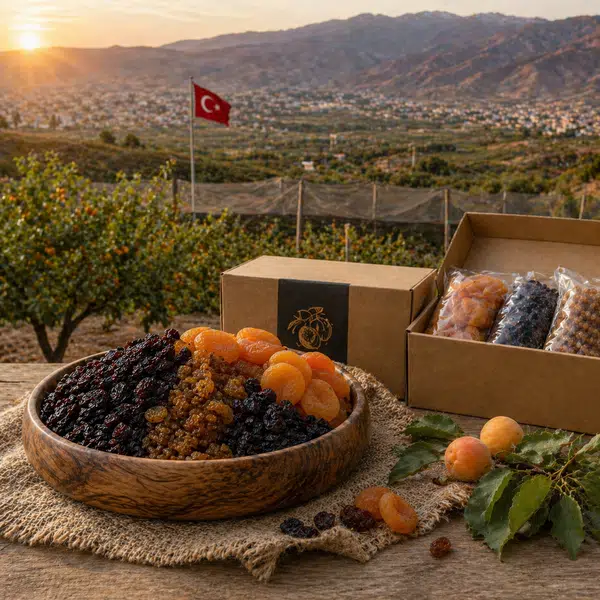
Atlas Global Trading Co. is presented as a modern Turkish dried fruit export company built for importers, distributors, industrial users, private label buyers and foodservice-oriented partners who want clearer supplier communication and more commercially usable product information. Rather than approaching export trade as a generic brokerage exercise, Atlas is structured around category relevance, regional sourcing logic, practical specification awareness and long-term buyer usability.
We present products, process, quality, sustainability and knowledge content in separate sections so buyers can review information efficiently and build a clearer picture before contacting us.
Our model prioritizes realistic product matching, relevant inquiry handling, clearer export communication and less friction between first contact and actual sourcing discussion.
Atlas supports both organic and conventional programs, as well as bulk, industrial, foodservice and selected private label supply routes depending on the product and market.
Many buyers face the same challenge when sourcing dried fruits internationally: too little clarity at the beginning of the supplier conversation. Atlas is designed to reduce that problem by offering a more structured view of the product portfolio, origin strengths, expected documentation logic, technical-commercial language and inquiry process. The result is a platform that supports better first conversations and more serious long-term trade relationships.
Our sourcing model is built around the Turkish regions that matter most to the products we present. This regional structure helps buyers connect each category with the production base most closely associated with its commercial reputation, crop logic and processing ecosystem.
Malatya is the strategic center of gravity for apricots, apricot kernels and mulberry-linked programs. For buyers interested in sun-dried apricots, organic apricots, natural apricots or related ingredient categories, Malatya remains one of the most commercially recognized origins in the entire Turkish dried fruit sector.
Aydın is a key origin for dried figs and related processed fig formats such as Lerida, Garland, diced and industrial styles. It plays an important role in premium fig sourcing and in the broader Mediterranean dried fruit category where origin identity strongly influences buyer confidence.
The wider Aegean region supports seedless raisins, sultanas and broader dried fruit packing capability. It is especially important for buyers sourcing mainstream categories with repeat volume needs, industrial applications and broader repacking or retail distribution models.
In dried fruit trade, origin is not just a background detail. It influences category reputation, product expectations, buyer trust, seasonal planning and even the commercial language used during sourcing discussions. A supplier that understands why a certain product is strongly linked to a certain region is better positioned to respond to real buyer priorities instead of relying on generic product claims.
Atlas is structured around a product portfolio that reflects both Turkish origin strengths and global commercial demand. The range is intentionally broad enough to support importers and portfolio buyers, but focused enough to remain credible and practical.
Organic supply is positioned for buyers who need certification-aware, origin-led and cleaner-label product routes. Core organic categories include sun-dried apricots, dried figs, dried mulberries, apricot kernels and selected complementary lines depending on the project structure and market.
Conventional and natural supply is designed for mainstream retail, repacking, industrial processing, foodservice and broad-volume trade. These programs can include natural or sulphured apricots, figs, raisins, mulberries, cherries, prunes and date categories depending on application and buyer needs.
Organic, natural and sulphured programs with strong Malatya relevance and broad commercial appeal.
Retail and industrial fig formats supported by Aydın-origin positioning and multiple processed styles.
Sultanas and black raisins for mainstream import, bakery, cereal, snack and private label channels.
Mulberries, cherries, apricot kernels and complementary date programs for broader portfolio coverage.
Atlas values clarity, consistency and long-term cooperation. We focus on realistic product alignment, relevant follow-up and practical commercial discipline from inquiry to shipment preparation. The goal is not only to attract inquiries, but to support better buyer decisions and more stable trade relationships.
We support annual planning, repeat business and continuity-oriented supply conversations instead of only short-term opportunistic transactions. Many serious dried fruit buyers care as much about consistency and follow-through as they do about initial pricing.
Products, process, quality, sustainability and knowledge are separated clearly so buyers can review the information most relevant to them. This improves pre-qualification and makes the first inquiry more productive.
We understand that the same dried fruit can serve very different commercial roles depending on whether it is being bought for retail snacking, industrial processing, bakery, confectionery, cereal or foodservice channels.
We approach supply with the realities of export trade in mind: packing structure, document readiness, technical expectations, destination-market considerations and the importance of a commercially useful first response.
Buyers can expect a more organized commercial experience: clearer product positioning, better-defined inquiry handling, more usable content on the website and a supply conversation that starts from the buyer’s actual market, application and pack requirement rather than from a generic exporter sales pitch.
Atlas is not positioned as a purely marketing-led platform. The site structure and company narrative are designed to support the way professional buyers actually evaluate dried fruit suppliers: through a combination of product suitability, regional credibility, quality language, packaging flexibility, documentation readiness and execution discipline.
We speak in terms buyers recognize: grade, size, moisture, format, product style, pack structure and application suitability.
Specification sheets, packing lists, invoices, origin documents and analysis records are treated as part of the trade process, not an afterthought.
Retail, bulk import, foodservice, industrial use and private label each require different commercial handling and product presentation.
Export business is not won only by having products available. It is won by being able to present the right product in the right commercial language, support it with the right documentation and structure the inquiry process in a way that respects how international buyers actually work.
Buyers can expect straightforward communication, practical product information and steady follow-up throughout the trade process. The journey is designed to move from initial clarity to technical-commercial alignment and then toward real supply discussion where there is a fit.
A structured inquiry form gathers company, market, product interest and estimated packing or volume requirements. This helps filter out vague requests and makes the first response more commercially relevant.
The product pages and quality section establish the language for grade, moisture, microbiology, product style, applications, packing options and document expectations. This creates a clearer base for meaningful discussion.
The process section explains how orchard-linked sourcing, selection, grading, packing and export readiness can be coordinated. Where mutual fit exists, the conversation can move into program, shipment or project planning.
This structure is especially useful for importers and purchasing teams that want to assess supplier seriousness before investing time in deeper negotiation. A supplier that explains its process clearly, presents its categories properly and invites well-structured inquiries is easier to evaluate and more efficient to work with.
Atlas is not only about having access to products. It is about presenting Turkish dried fruit supply in a way that is easier for modern international buyers to understand, compare and act on. The company identity is therefore built as much around communication quality and commercial usability as around the products themselves.
Separate pages for products, quality, process and sustainability make it easier to review the business logically.
Regional sourcing emphasis and trade-oriented content support a more serious exporter identity.
A buyer can move from overview to product detail to inquiry with less confusion and more commercial relevance.