Built for volume
Suitable for repeat-purchase programs, container-based trade, repacking operations and broad market distribution.
The natural and conventional range is built for buyers who need commercially workable supply, broad application flexibility and reliable category coverage across mainstream dried fruit lines. Atlas supports importers, repackers, industrial processors, wholesalers, foodservice suppliers and private label buyers with products that fit daily trade realities: clear formats, consistent sourcing logic, export-oriented packing options and market-relevant technical discussions.
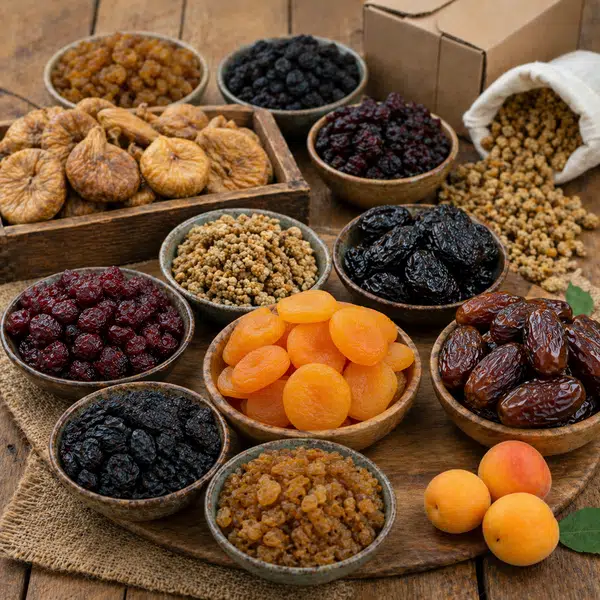
The conventional range is structured around products that serve everyday import, processing and retail demand. Compared with organic programs, conventional sourcing often places stronger emphasis on commercial flexibility, broader price positioning, mainstream market fit, volume practicality and application-specific execution. That makes it especially relevant for buyers balancing product quality with pack economics, replenishment speed and broad market coverage.
Suitable for repeat-purchase programs, container-based trade, repacking operations and broad market distribution.
Relevant across retail, foodservice, bakery, breakfast, confectionery, ingredient and industrial manufacturing channels.
Supports bulk export, industrial handling, private label discussions and buyer-specific pack strategies where feasible.
This range balances Turkish origin strengths in apricots, figs, mulberries, raisins and cherries with complementary supply categories such as prunes and dates. Final supply structure depends on crop, product format, buyer application and destination-market requirements.
A core Turkish category with broad commercial relevance. Natural sun-dried apricots support buyers looking for a darker, less processed appearance, while sulphured apricot programs support brighter color expectations and mainstream retail presentation in many markets.
Typical specification framework: natural sun-dried options without additives and standard sulphured options depending on market requirement, size and grade-based commercial structure, microbiological and contaminant controls reviewed per batch and destination expectation, non-GMO, final technical profile aligned to product type and intended application.
Mulberries add portfolio depth for buyers who want differentiated fruit lines beyond the most mainstream categories. They work especially well in snack mixes, cereal blends and premium natural assortments.
Typical specification framework: sun-dried and selected whole fruit, moisture and microbiological limits supplied according to agreed batch specification, non-GMO, physical quality profile discussed in line with use case, category positioning and target price level.
Prunes are a commercially practical category for buyers seeking a familiar, high-rotation dried fruit line with relevance across multiple channels. They can support both standard shelf programs and more application-led industrial usage.
Typical specification framework: natural washed, sorted and packed options, no additive profiles available on request depending on format, whole or pitted presentations, moisture and physical criteria aligned to product type and intended use, non-GMO.
Turkish dried figs are one of the strongest and most recognizable categories in the Mediterranean dried fruit trade. They serve both traditional retail demand and industrial applications that require structured format options.
Typical specification framework: processed in graded forms such as Lerida, Garland, diced and paste, moisture max. 24% typical in current specification depending on format, physical sorting and quality review according to style, market and customer requirement, non-GMO.
Sultana raisins are one of the most commercially important mainstream dried fruit categories. Their versatility makes them especially relevant for industrial buyers, repackers and large-volume import programs.
Typical specification framework: seedless grapes, naturally dried, moisture max. 18%, aflatoxin B1 < 5 ppb, total aflatoxin < 10 ppb, Salmonella absent, non-GMO, physical and microbiological criteria aligned to grade, processing style and application.
Black raisins offer an alternative visual and flavor profile within the raisin category. They are useful for buyers that want broader portfolio depth, differentiated shelf presence or application-specific fruit identity.
Typical specification framework: naturally dried black raisins, moisture max. 18%, non-GMO, standard microbiological and contaminant controls, final physical profile adjusted to grade, sorting level and destination requirements.
Dried sour cherries are a strong value-added category for buyers looking for flavor contrast, visual intensity and premium application potential. They are especially relevant in bakery, confectionery and upscale snack positioning.
Typical specification framework: moisture max. 15% in current specification, washed, sorted and packed, non-GMO, final physical and microbiological criteria determined by product type, sweetness-acidity balance and application route.
Dried cherries broaden the red-fruit offering for buyers who want categories with strong visual appeal and versatile food application value. They can sit between mainstream utility and premium differentiation depending on format and market.
Typical specification framework: moisture max. 15% in current specification, washed, sorted and packed, non-GMO, quality profile and commercial position adapted to the required style, target use and destination market.
Tunisian dates complement the Turkish-centered portfolio by adding a globally recognized date category with strong mainstream and premium relevance. They can support both standalone programs and broader multi-fruit assortments.
Typical specification framework: Deglet Nour supply programs with moisture max. 20% in current specification, washed, sorted and packed, pitted or standard presentation depending on project, final commercial structure based on grade, pack style and destination market.
Conventional products often serve a wider range of buyer types than organic programs. This page is intentionally more commercial in tone because the key purchasing drivers are usually volume practicality, pack flexibility, price-position fit, category turnover and downstream application efficiency.
For distributors who import bulk product and convert it into branded or customer-specific local retail formats.
For bakeries, cereal manufacturers, snack producers, confectionery companies and food ingredient users.
For horeca suppliers, wholesalers and large-format channels seeking stable, commercially efficient supply.
In natural and conventional programs, successful purchasing decisions usually depend on matching product style and technical expectations to the correct market route. Buyers often review more than the product name: they also consider grade, size, moisture behavior, retail appearance, ingredient suitability, microbiological profile, packing logic and total delivered practicality.
Size, count, moisture, texture, color consistency, defect tolerance and sorting level influence both value and usability.
Retail snacking, bakery, cereal, ingredient processing and foodservice use each require different product and pack decisions.
Buyers assess MOQ, shipment structure, repacking convenience, shelf presentation and repeat-purchase feasibility.
Specification sheets, shipment documents and analysis support are important for importer review and market access.
Transit stability, pack protection, container loading and storage behavior affect total trade performance.
Some products serve as high-volume staples, while others are used to differentiate or upgrade the overall assortment.
Atlas approaches packing as a commercial decision, not just a technical detail. The right pack format affects transport efficiency, landed cost, shelf presentation, warehouse handling and downstream conversion flexibility.
Suitable for importers, repackers and industrial processors that want maximum downstream flexibility and container efficiency.
Useful for professional kitchen, horeca and wholesale channels needing practical pack sizes and stable replenishment.
Relevant for retail projects where packaging, artwork, labeling and market positioning are part of the commercial model.
Product format discussions usually include carton size, inner liner structure, retail pouch or tray options, palletization logic, loading efficiency, barcode or label requirements, shelf-life expectations, storage conditions and the buyer’s preferred balance between landed-cost efficiency and sales presentation.
Conventional buying decisions often move faster when the supplier discussion is operationally clear from the start. Documentation readiness, product description consistency and shipment execution discipline all contribute to smoother trade flow.
Documentation quality affects importer approval, customs handling, private label onboarding, technical validation and repeat business confidence. Buyers generally prefer suppliers who can connect product supply with operational clarity, not just quote a price.
Conventional supply discussions become more effective when the project is clearly defined. A short but structured inquiry usually leads to better product matching, more relevant pricing and faster movement toward sample or order planning.
Clear inquiries reduce unnecessary back-and-forth and make it easier to respond with a suitable product route, a more accurate commercial structure and a supply conversation that matches the real needs of the buyer instead of relying on generic assumptions.