Better technical alignment
A transparent process helps buyers understand how moisture, texture, grade and general product presentation are controlled before shipment.
The Atlas process page explains how dried fruit programs move from agricultural sourcing to finished export shipment. For international buyers, this is more than a background story. It shows how product integrity, grading logic, packing discipline and documentation readiness are managed before goods leave origin.
The purpose of this page is to give importers, distributors, brands, repackers and industrial users a clear view of what happens between harvest and dispatch. A well-managed process reduces uncertainty, improves commercial confidence and supports smoother performance at receiving, customs and downstream production stages.
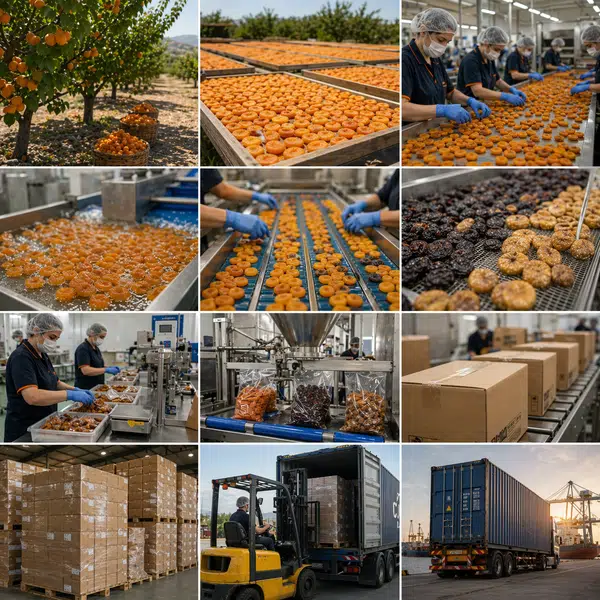
Buyers do not only purchase a product name. They purchase the result of a sequence: orchard selection, harvest timing, post-harvest handling, sorting, grading, packing, paperwork and shipment planning. If any of these stages are weak, the delivered product can fall short even when the raw material itself is good.
A transparent process helps buyers understand how moisture, texture, grade and general product presentation are controlled before shipment.
Importers and industrial users are more comfortable working with suppliers that can explain how orders move from sourcing to final release instead of only listing products.
Process clarity supports better shipment planning, fewer misunderstandings on packing and documents, and more realistic quality expectations before loading.
A professional buyer wants to know what actually happens between orchard and shipment. The sequence below presents the logic of how Atlas approaches dried fruit supply execution.
The process begins with the commercial brief: target product, crop window, certification profile, intended use, destination market, quality expectations and packing direction. This first stage is critical because the correct sourcing route depends on whether the buyer needs, for example, retail presentation, industrial functionality, organic certification or bulk import efficiency.
Once the requirement is clear, the appropriate product stream is selected according to origin, crop characteristics, product type and buyer need. This stage determines whether the order is best matched with specific regional supply, defined product style or a more application-oriented grade route.
Fruit is prepared according to the product profile and market requirement. Depending on the item, this can involve washing, sorting, grading, sizing, selection and product preparation steps designed to improve consistency, remove unacceptable material and make the goods suitable for the intended commercial channel.
Dried fruit is not sold as a generic commodity when serious buyers are involved. Grade logic matters. Different channels require different expectations on appearance, texture, moisture direction, sizing and overall usability. This stage helps align the lot with the right commercial purpose before packing begins.
Bulk, industrial, foodservice or private label packing is arranged according to the order profile. Shipment marks, carton information, label needs and handling logic are addressed at this stage so the product is packed not only for export, but for the buyer's actual route to market.
Before dispatch, shipment references, commercial documents and any agreed technical or origin-related paperwork are aligned. Loading schedule, release sequence and export dispatch are then managed so the transaction moves from packed goods to ready-to-ship cargo with fewer gaps.
Buyers often need more than a simple timeline. The points below explain what each process stage means commercially and technically.
The process page is useful because it shows that Atlas understands operational detail, not only product names. In dried fruit export, buyer confidence often depends on whether the supplier understands how agricultural reality connects with trade execution.
Seasonality and crop conditions matter, especially for annual programs, forecast-based purchasing and buyers who need to understand when fresh crop discussions should begin. A product's commercial behavior starts at orchard level.
Different channels require different quality, appearance and moisture profiles. Retail buyers may emphasize presentation, while industrial buyers may prioritize functional consistency and handling practicality.
Transit conditions, pack strength, pallet discipline, loading sequence and document accuracy all influence how the product performs when it reaches the destination market.
The overall workflow is similar, but the emphasis changes depending on who is buying and how the product will be used.
Usually focus on shipment readiness, commercial documents, dependable packing and consistent execution across repeat orders.
Often require product handling that supports broad downstream resale, warehouse practicality and adaptable packing structures.
Place more emphasis on product consistency, application fit, grade practicality and predictable lot behavior in production.
Need the process to support retail-facing packaging, label coordination and shipment presentation suitable for branded programs.
This page is most useful when it addresses the practical concerns that buyers actually evaluate during supplier review.
A supplier that can explain sourcing, grading, packing and dispatch in a clear way signals operational maturity. For B2B buyers, that matters almost as much as the product portfolio itself.
Atlas is positioned as a company that understands the movement from agricultural raw material to export cargo, not just sales language.
The process is described in a way that supports actual procurement decisions and reinforces confidence among serious buyers.
Clear process presentation helps buyers see that order handling, packing logic and shipment preparation are treated as integral parts of supply quality.
Tell us the product, destination market, estimated volume and packing structure so Atlas can respond with a process-oriented commercial discussion.