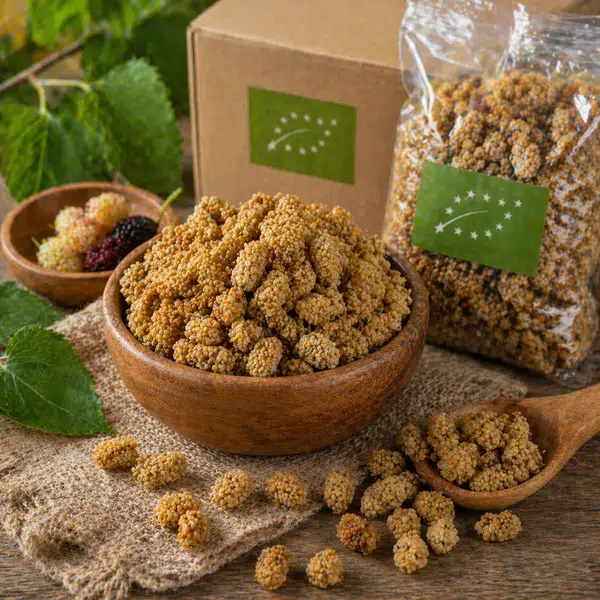
Organic product page

Organic Dried Mulberries

A specialty Turkish organic product for natural snack, cereal, bakery, blending and premium dried fruit programs.

Origin: Malatya / Anatolia, Turkey
Certification: Organic supply programs
Supply mode: Whole berries for snack, bakery, blending, repacking and selected retail-ready use
Commercial role: Specialty differentiator for natural, organic and premium dried fruit assortments
Snack use Blending Bakery Specialty Organic
Organic dried mulberries from Turkey

Commercial overview

Organic dried mulberries are a distinctive specialty product for natural snack assortments, cereal blends, bakery formulations and premium dried fruit mixes. Their commercial value is not based on commodity volume logic alone, but on differentiation, cleaner-label appeal and the ability to add variety to an organic dried fruit range without losing product simplicity.

For importers and distributors, mulberries can strengthen assortment depth by offering a less common product with clear natural positioning. For brands and private label buyers, they help create a more original shelf offer than standard raisins or prunes. For industrial users, they can serve as an inclusion ingredient in blends where visual contrast, sweetness and whole-fruit character are commercially useful.

This page is structured to help importers, distributors, repackers, private label buyers and industrial users review the line before moving into detailed quote discussions around grade, visual profile, packing format, shipment size, certification scope and destination market requirements.

Specification snapshot

Sun-dried, selected and packed, aflatoxin B1 < 5 ppb, total aflatoxin < 10 ppb, aw 0.70, yeast & mold max. 10,000 cfu/g, non-GMO.

Depending on the commercial program, discussions may also include moisture range, berry size distribution, color profile, stem tolerance, broken fruit level, foreign matter control, microbiological alignment, residue expectations and pack structure.

Final values may be aligned to crop conditions, grade, processing route, customer application, certification scope and destination market requirements.

Range position

Organic Range

A specialty Turkish organic product for natural snack, cereal and bakery blends.

Key applications

  • Natural snack assortments
  • Cereal blends
  • Bakery formulations
  • Premium dried fruit mixes
  • Repacking programs
  • Specialty private label

Packing direction

  • Whole berry export packs
  • Snack-oriented formats
  • Blending supply
  • Bakery-use packs
  • Bulk cartons
  • Retail-ready options

Why this product works commercially

Organic dried mulberries are most attractive where the goal is category differentiation. They are not usually bought as a substitute for mainstream dried fruits, but as a way to introduce a more distinctive organic ingredient or snack product into a portfolio. This makes them especially relevant for buyers serving natural food retail, premium snack concepts and curated organic assortments.

  • Specialty positioning supports portfolio differentiation
  • Organic status strengthens natural and clean-label appeal
  • Whole-fruit format works in both snack and blend applications
  • Suitable for premium merchandising and niche product development
  • Useful for private label ranges that need something less standard
  • Can complement more established dried fruit lines in the same program

Typical buyer profiles

  • Organic importers: seeking a specialty line to widen category coverage
  • Distributors: supplying natural food stores, specialty retail and premium wholesale channels
  • Snack brands: developing natural fruit-based concepts and mixed fruit offerings
  • Private label buyers: looking for a differentiated organic item with stronger shelf interest
  • Repackers: needing whole-fruit product for conversion into retail packs
  • Industrial users: evaluating mulberries for cereal, granola, bar and bakery inclusion

Technical product profile

Product character

Organic dried mulberries are whole dried berries with a naturally sweet profile and light-to-golden visual character depending on crop and drying conditions. Their commercial appeal comes from their distinctive appearance, naturally positioned sweetness and specialty-product identity.

Processing direction

Programs are generally discussed as sun-dried whole berries that are selected and packed according to the intended use. Buyers may also review sorting level, broken fruit tolerance, stem presence, cleanliness standard and final pack suitability.

Application fit

Suitable for direct snacking, granola and cereal inclusion, bakery mixes, trail mixes, dried fruit assortments, repacking and premium organic shelf programs.

Commercially relevant quality parameters

In practice, organic mulberries are bought against a specification that reflects the real market route. The most important parameters are the ones that affect visual acceptance, blend performance, consumer presentation, certification confidence and complaint risk after arrival.

  • Organic certification alignment and document scope
  • Whole berry appearance and visual cleanliness
  • Color range and natural visual consistency
  • Broken fruit tolerance and berry integrity
  • Stem tolerance where applicable
  • Water activity and general texture condition
  • Foreign matter control
  • Microbiological expectations according to application
  • Aflatoxin control and contaminant review
  • Residue and market-specific compliance expectations

Typical specification discussion points

  • Snack, blend, bakery or retail end use
  • Target visual profile and acceptable natural variation
  • Required sorting standard and broken fruit tolerance
  • Microbiological and analytical limits
  • Organic certification requirements for the destination market
  • Pack format, net weight and carton structure
  • Private label scope and label messaging
  • Document package for customs, QA and organic approval
  • Shipment size and planning cycle
  • Any customer-specific restrictions or approval conditions

Indicative technical specification framework

The framework below is intended for inquiry-stage alignment only. Final values and tolerances should always be confirmed in the approved specification and contract documents.

Product name: Organic dried mulberries

Origin: Malatya / Anatolia, Turkey

Certification: Organic supply program

Presentation: Whole dried berries

Drying method: Sun-dried

Processing status: Selected and packed

Water activity: 0.70

GMO status: Non-GMO

Aflatoxin B1: < 5 ppb

Total aflatoxin: < 10 ppb

Yeast & mold: Max. 10,000 cfu/g

Appearance: Characteristic for organic dried mulberries and agreed sort level

Taste and odor: Characteristic, free from abnormal odor

Storage: Cool, dry and hygienic storage away from moisture, heat and odor sources

Shelf life: To be confirmed according to pack type, storage conditions and production timing

Exact values for moisture, defects, residues, microbiology and packaging construction should be finalized according to the agreed program and destination market.

Snack direction

Suitable for natural snack concepts where specialty appeal and whole-fruit identity are commercially important.

Blending direction

Works well in cereal, granola, trail mix and premium dried fruit blends where visual variation and differentiation add value.

Bakery direction

Relevant for selected bakery and inclusion programs where a specialty organic fruit ingredient is preferred over standard options.

Application-specific buying logic

Different channels evaluate mulberries in different ways. A snack buyer may focus on uniqueness, appearance and consumer storytelling, while a cereal or bakery buyer may look more closely at berry integrity, blend compatibility and consistency. This is why intended use should be defined early in the inquiry process.

  • Natural snack assortments: appearance, specialty value and consumer differentiation
  • Cereal and granola: blend behavior, berry integrity and visual contrast
  • Bakery formulations: application suitability and handling practicality
  • Premium fruit mixes: assortment value and visual diversity
  • Repacking: stable incoming quality for secondary packing
  • Private label: niche positioning, organic claims and pack presentation

Packing and private label options

Packing structure depends on whether the product will move as a specialty bulk ingredient or as a differentiated consumer line. Bulk packs suit importers, repackers and industrial users, while smaller shelf-ready concepts fit organic retail and private label programs.

  • Bulk cartons for import and repacking
  • Ingredient-oriented packs for blending and processing
  • Retail pouch or carton concepts for specialty shelf sale
  • Private label programs subject to agreed artwork and legal text
  • Pallet and carton planning based on warehouse and transport logic
  • Selected retail-ready options where commercially appropriate

Final pack dimensions, inner packaging, carton type, label scope, palletization and load plan should be confirmed during quotation and approval.

Organic compliance and documentation logic

Because this is an organic specialty product, documentation and traceability are part of the commercial offer. Buyers usually need clarity on certification scope, lot identity, product traceability and the document package required for customs, QA and market approval.

  • Organic certification alignment according to the target market program
  • Lot-based traceability and product identification
  • Document readiness for customs, QA and organic verification
  • Specification confirmation before dispatch
  • Private label copy and organic claim review where applicable
  • Clear inspection logic to reduce dispute risk after arrival

Shipment and supply planning

Organic dried mulberries are often handled as a specialty line within a broader organic dried fruit assortment. Shipment planning therefore matters commercially, especially when buyers are combining multiple organic products in the same procurement cycle or building seasonal specialty programs.

  • Suitable for structured specialty or mixed organic procurement programs
  • Can complement apricots, figs, prunes and other dried fruits in broader assortments
  • Requires early alignment on documents, labels and pack direction
  • Benefits from clear load planning and pallet configuration approval
  • Should match the buyer's assortment timing and inventory cycle

Commercial risks to clarify early

  • Using commodity-style expectations for a specialty organic product
  • Not aligning visual expectations with natural whole-berry variation
  • Leaving organic document requirements until late in the buying process
  • Not defining acceptable broken fruit or stem tolerance clearly enough
  • Starting private label work before claims and label scope are fixed
  • Assuming snack, blend and bakery channels require the same specification logic

What buyers usually want from a supplier discussion

Most serious inquiries focus on making sure the product matches the intended sales concept. Buyers usually want clear guidance on sort level, visual profile, packing direction and documentation so the offer is commercially useful from the start.

  • Clear recommendation on the right supply format for the application
  • Packing options suitable for the sales channel
  • Technical alignment on microbiology, aflatoxin and product condition
  • Organic certification and document clarity
  • Shipment structure that supports repeat business
  • Commercial detail strong enough for internal approval and customer planning

How Atlas usually discusses this product

Commercial discussions usually begin with the intended use, because a snack-oriented mulberry program is not always identical to a bakery or blending program. The next step is normally to define the target market, the expected visual profile and the required pack direction. Buyers in natural retail may focus more on appearance, specialty value and label messaging, while industrial users usually focus more on sort level, berry condition, specification control and document readiness.

From there, the discussion typically moves into grade logic, microbiological and residue expectations, packing format, organic documentation, labeling scope and whether the supply will be used for bulk import, repacking, private label retail, ingredient blending or specialty food manufacturing.

Snack use Blending Bakery Specialty Organic
Quick Contact