Crop size and condition
The overall crop outcome affects how much commercially usable product enters the market and how much flexibility exists for different grades and programs.
A practical commercial guide to what drives pricing in Malatya sun-dried apricots and which risk factors buyers should manage before committing to bulk, private label or industrial programs.
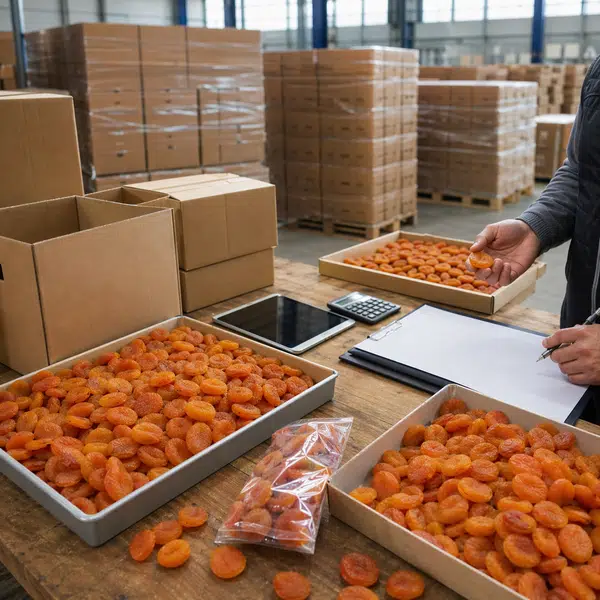
Sun-dried apricot pricing is rarely explained by one factor alone. Serious buyers usually need to understand both the cost drivers and the risks behind the quotation.
Malatya sun-dried apricots are one of the most commercially important dried fruit categories in Turkey and are supplied into retail, private label, foodservice, wholesale and industrial channels. Because the product serves several market types at once, pricing is shaped by multiple forces: the crop itself, the grade requested, the level of sorting required, the packaging structure, the timing of the purchase and the final route to market. That is why a simple price-per-kilogram comparison often produces misleading conclusions.
In practice, buyers usually face two connected questions. The first is why the price is at a certain level. The second is what commercial risks are hidden behind that level. A cheaper offer may reflect a different grade logic, weaker pack scope, less selection, later shipment uncertainty or a less stable annual program structure. A higher offer may reflect tighter presentation standards, better planning discipline or a more complex private label requirement. Without understanding the underlying drivers, it is difficult to benchmark quotations properly.
Commercial risk matters because the cheapest available product is not always the most economical product once delays, rejections, repacking costs, stock interruptions or customer dissatisfaction are considered. For importers, distributors and manufacturers, the real cost of a sourcing decision often appears after the product is loaded, packed or released to the market. Atlas therefore looks at price and risk together rather than as separate topics.
This article helps buyers identify what usually moves sun-dried apricot prices and how to reduce avoidable risks before placing the order. The goal is not to make pricing more complicated than necessary, but to make it more transparent and commercially useful.
Most quotations are shaped by a combination of agricultural, commercial and operational factors rather than by one simple market price.
The overall crop outcome affects how much commercially usable product enters the market and how much flexibility exists for different grades and programs.
More selective programs generally require tighter sorting and stronger presentation control, which can materially change the price structure.
Sulfur-free or other differentiated product profiles may be priced differently depending on demand, process route and market expectations.
Bulk cartons, foodservice packs and private label retail units do not carry the same cost logic, even when they use similar raw material.
When the inquiry reaches the market can affect commercial flexibility, pack preparation options and the ease of building a stable supply program.
Spot orders, trial shipments and annual commitments may each create different pricing dynamics depending on volume visibility and planning discipline.
Sun-dried apricots are a crop-based product, so agricultural timing and raw material flow have a strong influence on commercial behavior.
Because the product originates from a defined harvest cycle, pricing is closely connected to crop development, drying flow and the later availability of commercially usable stocks. Early in the cycle, quotations may still reflect uncertainty about the true crop profile. As the season becomes clearer, the market gains a better understanding of raw material flow, grade formation and likely export capacity. Later in the cycle, price behavior can depend increasingly on carryover stock and how much product remains available in the right commercial profile.
For buyers, the main lesson is that price should always be read in seasonal context. A quotation does not exist in isolation. It sits within a crop year and reflects not only today's demand but also how much confidence the market has in future availability, packing flexibility and continuity of supply. Buyers who follow the seasonal flow usually benchmark more effectively than buyers who only enter the market when stock becomes urgent.
Two offers for sun-dried apricots may look similar in name, but not in the amount of selection and presentation control behind them.
Programs requiring stronger uniformity usually carry a different commercial profile than programs that accept broader natural variation.
The more tightly the product is selected for a certain presentation standard, the more that requirement can influence the quotation.
Consumer-facing channels often place more value on visual coherence, which can shift the price structure compared with industrial or repacking routes.
Industrial or ingredient users may not need the same presentation logic as premium retail buyers, so the right specification is not always the most expensive one.
Buyers often focus on fruit cost first, but packaging structure can significantly change the final commercial offer.
Bulk export cartons, foodservice packs and private label consumer units carry very different operational demands. A private label program may include consumer pack materials, artwork coordination, label discipline, outer carton logic and stronger transit protection for shelf-ready goods. A bulk program may focus more on efficient transport packaging and destination-side repacking flexibility. These are not minor adjustments. They are meaningful cost and execution differences.
That is why price comparisons become weak when buyers benchmark a retail-ready program against a bulk-export quotation as if both represented the same scope. The correct comparison should consider the total structure: fruit profile, pack format, carton type, label expectations, pallet logic and whether value is being added at origin or at destination.
The same product may be commercially easier or harder to structure depending on when the buyer enters the market.
These may offer better program-building opportunities, although full crop clarity may still be developing.
This period often allows more concrete discussions once the commercial profile of the season is better understood.
Product may still be available, but grade flexibility, pack options or shipment convenience can become more limited as the cycle advances.
Timing does not mean buyers must always commit immediately. It means that when and how a buyer enters the market affects the type of offer available. Serious annual buyers usually benefit from season-aware planning because it gives them a stronger basis for comparing quotations and managing continuity risk.
Risk is not only about whether the shipment arrives. It is about whether the program performs as expected across quality, packaging, timing and customer acceptance.
Commercial risk in sun-dried apricot trade usually appears when the offer and the real requirement are not fully aligned. This can happen when the grade is loosely defined, when packaging scope is underestimated, when private label approval is incomplete, when annual demand is not shared early enough or when the buyer compares price without checking the underlying specification. The shipment may still move, but the landed commercial performance can be weaker than expected.
Examples of commercial risk include needing to re-sort product locally, facing delays because label or document logic was incomplete, receiving a pack structure that does not match the buyer's warehouse flow, or finding that repeat shipments do not align well with the original approved standard. These are not always quality failures. Often they are planning failures. The best risk management starts before the quotation is finalized.
The real sourcing risk usually lies in the gap between the buyer's actual need and what the quotation truly covers.
If the product brief is too general, the quotation may not reflect the real grade, quality profile or route-to-market requirement.
Weak alignment on carton structure, consumer unit or label scope can create extra cost and friction after the product is already packed.
Late buying may reduce planning flexibility and increase reliance on whatever pack or stock structure remains easiest to ship.
Spot buying can expose the buyer to more inconsistency than a properly built annual program, especially in seasonal categories.
Private label and retail projects are vulnerable when product, pack and documentation are not approved together as one commercial system.
Two quotations that look cheaper or more expensive may not be comparable if their scope, grade logic and execution assumptions differ materially.
In seasonal fruit categories, structured programs often perform better commercially than repeated reactive purchasing.
When buyers share demand estimates early, suppliers can structure supply more rationally rather than respond only to urgent short-term orders.
A fixed program baseline reduces the chance of changing grade, pack or label assumptions from one shipment to the next.
Retail and private label materials can usually be managed more efficiently when the program is planned as a recurring flow.
Buyers with a structured annual program are usually less exposed to the commercial pressure of urgent replacement buying.
Most pricing confusion comes from comparing offers that are not actually equivalent in product or execution scope.
Apparent price gaps may reflect different levels of selection, visual consistency or market suitability rather than simple supplier margin differences.
A quotation with private label pack requirements cannot be compared directly with a simple bulk export offer on fruit price alone.
Retail, foodservice, bulk repacking and industrial applications each create different commercial logic and therefore different pricing logic.
Spot market behavior may not reflect the full value of a stable, planned annual supply program with repeat execution discipline.
When the specification is not fixed clearly, later disputes over what was included in the price become more likely.
The true commercial cost may increase later if the shipment creates extra handling, repacking or continuity problems after arrival.
The strongest protection against price-related problems is a more disciplined commercial brief before the offer is finalized.
State grade, sulfur-free or other quality profile, end use and presentation level clearly enough that the quotation covers the real requirement.
Bulk export, foodservice, consumer-ready retail and private label should be treated as distinct program structures, not minor variations.
Even a broad forecast helps suppliers shape a more stable program and reduces the risk of repeated tactical buying.
Once the product and pack are approved, repeat shipments should follow that standard so the buyer can benchmark consistently.
A serious pricing discussion should cover not only the fruit but also the assumptions behind the final landed program.
Confirm grade, quality profile, intended application, target channel and whether the product is meant for retail, bulk, private label or industrial use.
Share pack format, carton structure, label expectations, shipment rhythm and whether value is being added at origin or at destination.
State whether the inquiry is for a trial, recurring order, annual contract or customer launch, and indicate the expected demand range where possible.
These are the main points buyers usually need before evaluating apricot quotations seriously.
Crop conditions matter, but grade, packing, timing, route to market and level of selection also materially influence the quotation.
The less clearly the requirement is defined, the higher the chance that the final shipment does not perform as expected commercially.
Meaningful benchmarking only happens when the buyer compares like-for-like product, packaging and execution structures.
Structured demand planning often improves continuity and lowers avoidable price and execution pressure compared with repeated spot buying.
Short answers for buyers reviewing sun-dried apricot pricing and risk before placing orders.
Buyers should clarify end use, target market, desired grade, sulfur-free or other quality profile, required certification scope and preferred pack format before requesting a quotation.
Because sun-dried apricot prices are influenced by several factors at once, including crop timing, raw material availability, grade, packing structure, shipment rhythm and the buyer's commercial route to market.
The biggest influences are crop conditions, supply availability, grade requirements, the degree of selection needed, packaging scope, timing of purchase and whether the program is for private label, bulk or industrial use.
In many cases yes, provided the fruit profile, certification requirement, pack structure and channel-specific commercial expectations are aligned with the customer requirement and the available sourcing program.