Fruit and nut clusters
Sun-dried apricot pieces can contribute chew, acidity and visible fruit identity in mixed confectionery clusters or coated snack-sweet formats.
A practical commercial guide to how Malatya sun-dried apricots are used in confectionery, covering ingredient behavior, industrial formats, processing expectations and buyer-side sourcing considerations.
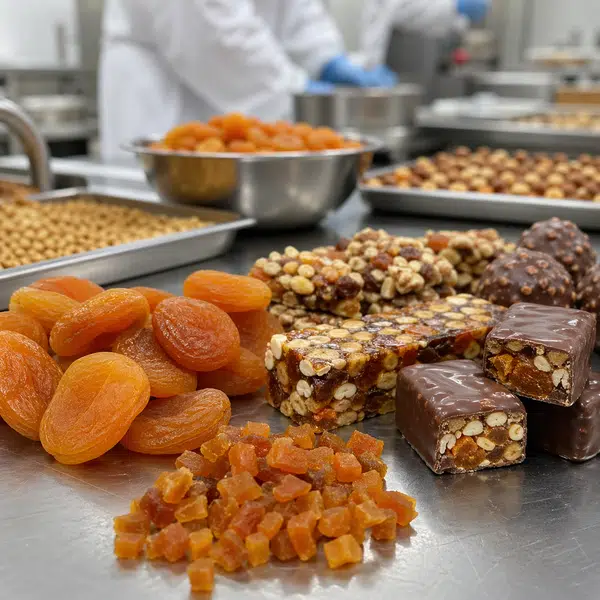
Sun-dried apricots are not only a retail dried fruit. In confectionery, they can function as a flavor-bearing, texture-giving and visually distinctive ingredient.
Malatya-origin sun-dried apricots are widely recognized as a flagship Turkish dried fruit and are used across several value chains, including retail packs, bakery, ingredient distribution and industrial food manufacturing. In confectionery, they are valued because they can deliver natural fruit identity, sweetness-acidity balance, chew, visual contrast and a premium fruit perception that works well in both traditional and modern product development.
However, confectionery use is different from general dried fruit trade. A confectionery manufacturer usually does not evaluate sun-dried apricots only by origin or headline price. The more important questions are application-specific: how the apricot cuts, how it behaves as an inclusion, whether its texture stays manageable in the finished product, how its natural sweetness and acidity interact with sugar or chocolate systems, and whether the ingredient can be packed and supplied in a format suitable for the production line.
That is why buyers in confectionery need a more technical and commercial discussion than simply asking for apricots in bulk. They usually need to define whether the fruit will be used whole, diced, chopped, paste-like, enrobed, layered, blended into fillings or included in bars, bites, praline formats or fruit-based confectionery systems. Each use case changes the most appropriate grade, cut format, pack style and commercial offer.
Atlas treats confectionery as a separate industrial application because it places specific demands on texture control, cut consistency, flavor impact, moisture management and process suitability. A confectionery-oriented sourcing conversation therefore moves faster when the application logic is made explicit from the beginning.
The ingredient can fit several confectionery concepts, from fruit-forward products to chocolate, nut and snack-inspired sweet formats.
Sun-dried apricot pieces can contribute chew, acidity and visible fruit identity in mixed confectionery clusters or coated snack-sweet formats.
Apricot can be used in selected chocolate applications where a fruity, tangy profile is desired to contrast sweeter bases.
Apricot is often relevant in fruit-led confectionery systems where natural sweetness and texture are central to the product concept.
Processed apricot forms may support fillings, layered structures or fruit-centered confectionery concepts depending on the manufacturing system.
Sun-dried apricots can work in higher-value confectionery presentations when paired with nuts, coatings or artisanal fruit positioning.
They are also relevant in modern crossover formats that sit between confectionery, snacking and fruit-based indulgence products.
In industrial confectionery, the ingredient must perform on the line as well as it performs in the finished product.
The apricot should remain workable for the intended application, whether the goal is chew, softness, diced inclusion or a more processed fruit component.
Where the product is diced, chopped or otherwise processed into inclusions, consistent size helps improve dosing, distribution and product uniformity.
Sun-dried apricots contribute sweetness, acidity and concentrated fruit notes that can materially influence the final sensory profile of the confection.
Color and visible fruit identity may matter, especially in premium or transparent-format confectionery where appearance supports the brand story.
The ingredient should arrive in a pack format that supports easy handling, line-side storage and practical transfer into production.
Manufacturers usually value a stable ingredient profile across recurring shipments so development work and line settings do not need frequent adjustment.
The best format for confectionery depends on whether the apricot is used as a visible piece, a structural fruit component or a processed ingredient input.
In confectionery, whole fruit is only one possible route. Some manufacturers need larger visible pieces for premium fruit identity. Others need small diced or chopped formats for uniform dispersion in bars, clusters or coated products. Others may require a more process-oriented format if the apricot is entering a filling, layer or fruit-based center. Because of this, the sourcing brief should identify the intended end form before price benchmarking begins.
That end form affects commercial logic. A visible inclusion format may prioritize appearance and controlled cut size. A filling-related format may prioritize workable texture and flavor consistency. A bulk ingredient input for downstream processing may allow more flexibility in appearance if the application will transform the fruit further. These are all valid industrial uses, but they do not lead to the same sourcing brief.
The right industrial quality profile is the one that fits the actual confectionery system, not necessarily the one with the strongest retail presentation.
Confectionery users usually want an ingredient that fits their handling and finished product design without creating unnecessary processing difficulty.
Where apricot is used as a piece ingredient, reliable behavior in mixing or depositing can be more important than a premium retail-style appearance.
Industrial buyers often accept a different quality logic than retail buyers, provided the ingredient stays commercially and technically fit for the intended line.
The fruit should support the recipe target, whether the aim is pronounced apricot identity or a softer supporting fruit note.
For inclusion formats, consistent industrial presentation can be more valuable than general product attractiveness in isolation.
The correct industrial grade depends on the confectionery use case rather than on retail assumptions carried over from another market channel.
Retail buyers and confectionery manufacturers may both want sun-dried apricots, but they rarely want the same commercial program.
Retail programs usually emphasize whole-fruit appearance, presentation consistency, consumer pack structure and shelf-ready quality perception. Confectionery users are generally more focused on process fit, cut format, ingredient functionality and line practicality. That means a product that is perfect for a premium consumer pouch may not be the most efficient ingredient for a confectionery manufacturer, and vice versa.
From a sourcing perspective, this distinction matters because it changes the most relevant quotation criteria. For confectionery, buyers usually need to discuss format, texture behavior, particle size expectations, pack handling and annual industrial demand rather than focusing mainly on retail-grade presentation. Once that distinction is clear, the supplier conversation becomes more useful and the quotation becomes easier to interpret.
Confectionery users often need packs designed for factory handling rather than retail presentation.
These are typically preferred when the apricot will move directly into manufacturing rather than into a consumer-facing sales unit.
The correct industrial pack should be manageable for receiving, storage, opening and controlled use during production.
Where annual volume is significant, pallet logic and warehouse movement matter commercially because they affect operational efficiency.
Industrial users usually need clear lot identification to support internal QA, production planning and repeat purchasing discipline.
The strongest industrial programs begin with a technical-commercial brief, not only a buying target price.
To build a reliable confectionery supply program, buyers usually need to define the final application clearly. Is the apricot used in clusters, inclusions, fruit centers, bars, fillings or layered sweet snacks? Does the factory need diced pieces, chopped input or a more processed fruit component? Is the key priority visible fruit identity, chew, acidity balance, processing ease or cost efficiency? These answers shape the correct product brief.
Once the application is clear, the discussion can move to industrial quality expectations, pack format, annual volume, shipment rhythm and whether the program requires organic or conventional supply. This approach usually produces more useful quotations and reduces the chance of selecting a product that looks acceptable on paper but performs weakly on the line.
Most problems arise when the buyer uses a general dried fruit brief for a confectionery-specific application.
Asking for sun-dried apricots without defining whether the need is whole, diced, chopped or process-ready usually weakens the quotation quality.
Retail-facing presentation logic may not reflect the most efficient or relevant quality profile for confectionery manufacturing.
Ingredient suitability is difficult to judge unless the supplier understands how the apricot will function inside the confectionery product.
A product may be technically suitable but still inefficient if the industrial pack does not fit the receiving and production environment.
The lowest-priced apricot offer may become less economical if cut consistency, usability or repeatability are not aligned with the application.
Without at least a demand range, suppliers can only respond tactically rather than structure a more stable confectionery ingredient program.
A strong confectionery inquiry should define the technical use case clearly enough that the quotation reflects the true industrial requirement.
State whether the apricot is for inclusions, clusters, bars, fruit centers, fillings or another confectionery system, and explain the role it plays in the product.
Confirm cut format, target texture, sulfur-free or other quality profile, expected consistency and whether appearance or processing behavior is the main priority.
Share expected volume, industrial pack requirement, certification scope and whether the inquiry is for trials, development work or a recurring production program.
These are the main points confectionery buyers usually need before sourcing sun-dried apricots as an industrial ingredient.
Sun-dried apricots should be sourced according to their function in the confectionery system, not only as a general dried fruit commodity.
Whole, diced, chopped or further-processed formats can lead to very different commercial and technical outcomes in manufacturing.
The most efficient confectionery ingredient is often the one that performs best in the process, not the one that looks strongest in a consumer pack.
Once the application, cut format, pack style and annual demand are defined, the supplier can structure a much more useful industrial offer.
Short answers for confectionery manufacturers, ingredient buyers and product developers reviewing sun-dried apricot applications.
Buyers should clarify end use, target market, desired grade, sulfur-free or other quality profile, required certification scope and preferred pack format before requesting a quotation.
Because confectionery applications require their own quality logic. Manufacturers usually evaluate apricots by cut behavior, moisture profile, inclusion stability, sweetness-acidity balance, visual effect and compatibility with the target confectionery format.
The main priorities are application fit, manageable texture, suitable moisture, consistent cut size, flavor balance, pack format and whether the ingredient performs reliably in the intended confectionery process.
In many cases yes, provided the fruit profile, certification requirement, cut format and industrial packing structure are aligned with the customer requirement and the available sourcing program.