Fruit breads and rolls
Sun-dried apricots can be used as visible fruit inclusions that add sweetness, chew and premium fruit identity in dough-based products.
A practical commercial guide to how Malatya sun-dried apricots are used in industrial bakery, covering ingredient functionality, cut formats, dough and filling applications and professional sourcing considerations.
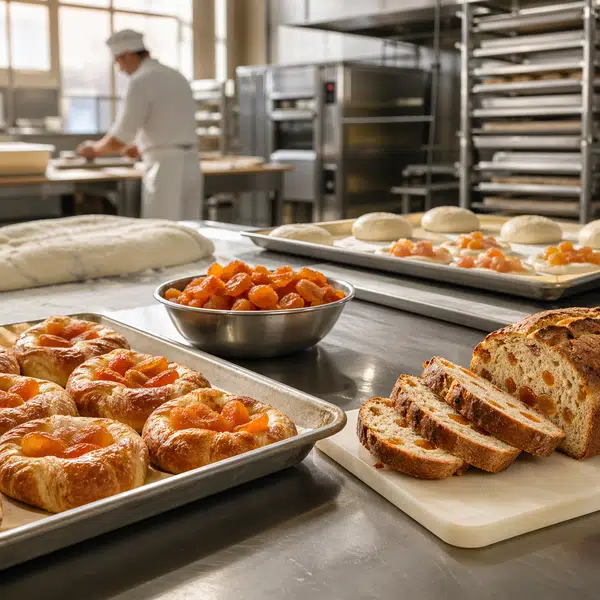
Sun-dried apricots are one of the more versatile fruit ingredients in bakery because they can work as visible inclusions, fruit pieces, paste-style components and filling-oriented inputs.
Malatya-origin sun-dried apricots are a flagship Turkish dried fruit with strong relevance across retail, ingredient distribution, industrial bakery, confectionery and snack manufacturing. In bakery, they are valued because they deliver concentrated fruit character, natural sweetness, mild acidity, recognizable fruit identity and a soft chew that can complement a wide range of baked products.
However, bakery use is highly application-specific. A manufacturer of cookies, cereal bars, morning pastries, fruit breads, fillings, molded bakery snacks or premium inclusions does not evaluate apricots in the same way as a retail pack buyer. Industrial bakery teams usually care about how the fruit behaves in dough systems, how well it can be cut or incorporated, whether it supports consistent deposit or filling behavior, how it affects finished product texture and whether it remains commercially acceptable after production and packing.
This is why buyers usually need a more technical and commercial conversation than simply asking for sun-dried apricots by the kilogram. They need to define whether the fruit will be used as a visible piece in dough, a controlled diced inclusion, a fruit layer component, a filling input or a process-ready material for downstream bakery systems. Each application changes the most suitable format, quality profile, pack style and quotation logic.
Atlas treats bakery as a distinct industrial application because the correct sourcing decision depends on how the ingredient behaves in production, not only on general dried fruit specification. Once the bakery use case is clearly defined, the supplier can structure a more relevant and commercially useful offer.
The ingredient is relevant across premium artisanal concepts and larger-scale industrial bakery formats where fruit identity and texture are commercially important.
Sun-dried apricots can be used as visible fruit inclusions that add sweetness, chew and premium fruit identity in dough-based products.
Diced or chopped apricot can contribute fruit flavor and textural contrast in soft or crunchy bakery applications depending on the recipe concept.
Apricots are often used in bakery-style bars where they support fruit character, binding perception or a soft inclusion profile.
They may also be relevant in products where apricot functions through layers, centers, fillings or hybrid fruit-based bakery systems.
Sun-dried apricot pieces can provide differentiated fruit character in premium cake-style or snack cake applications.
They fit well in modern bakery-snack formats that seek natural fruit inclusions and a recognizable dried-fruit story.
In bakery, the ingredient must not only look right in the raw format. It must also be workable in the production system and commercially acceptable in the finished product.
The apricot should match the bakery format, whether the product requires larger visible pieces, smaller diced inclusions or a more process-oriented fruit input.
Manufacturers usually want ingredient behavior that fits mixing, forming, filling or depositing systems without creating unnecessary processing difficulty.
Sun-dried apricots can provide a distinctive soft chew, but the target texture must fit the bakery product concept rather than dominate it.
The fruit contributes sweetness with mild tartness, and that flavor effect should align with the intended sweetness profile of the bakery item.
Where the apricot is used in fruit centers or bakery fillings, the ingredient should support a workable and commercially consistent system.
Industrial bakery users usually value a stable ingredient profile across recurring shipments so product development and production settings remain reliable.
The best apricot format depends on whether the fruit is intended as a visible bakery inclusion, a small dispersed piece or part of a more processed fruit system.
Bakery use can vary significantly from one product type to another. Some breads, rolls or premium pastries work best with larger visible fruit pieces that create a stronger visual and sensory impression. Cookies, bars or cake systems may need more controlled diced or chopped formats so the inclusion is easier to distribute and more consistent across the batch. Some bakery applications are even more process-oriented and may require fruit in a form suitable for fillings, layers or downstream bakery preparation.
Because of this, the buying brief should define what the apricot is expected to do. Is it there to be seen clearly in the finished bakery product, to contribute a uniform fruit presence, to support a center or layer, or to deliver flavor and chew in a more technical inclusion system? The answer changes the most appropriate commercial specification. A visible inclusion format may prioritize appearance and piece integrity, while a bakery-system input may prioritize workable texture and production efficiency.
The correct industrial quality profile is the one that performs reliably in the bakery system, not necessarily the one optimized for whole-fruit retail presentation.
Bakery manufacturers generally want fruit that integrates well into production without causing avoidable handling or consistency problems.
Where the apricot is prepared into inclusions, consistent cut performance can materially affect batching and finished product uniformity.
The fruit should contribute an enjoyable bakery texture rather than feel disproportionately firm or dominant in the finished bite.
Industrial bakery users may accept a different appearance logic than premium retail buyers, provided the ingredient remains functionally fit for the application.
The apricot profile should work with bakery ingredients such as grains, sugars, nuts, dairy notes, spices or other fruit components.
Stable ingredient performance across shipments usually matters more to bakery manufacturers than purely consumer-style whole-fruit presentation.
Bakery manufacturers buy apricots as a functional ingredient, not only as a finished dried-fruit product for direct shelf sale.
Retail programs typically emphasize whole-fruit appearance, pack presentation and consumer-facing visual quality. Bakery applications are different. Industrial bakers usually focus more on ingredient performance, cut suitability, dough or filling compatibility, factory handling and repeatable processing behavior. That means a fruit profile designed for premium shelf presentation may not always be the most efficient or relevant option in bakery manufacturing.
This distinction matters commercially because it changes how quotations should be built and compared. A bakery-focused inquiry should usually prioritize use case, inclusion format, pack format, annual volume and intended process logic rather than relying on a general whole-fruit retail benchmark. Once that distinction is made clear, suppliers can respond with more relevant offers and buyers can benchmark more accurately.
Bakery applications usually require industrial packing suitable for factory storage, controlled use and repeat production flow.
Most industrial bakery programs use bulk-oriented pack formats that are better suited to warehouse storage and manufacturing release than retail-ready packs.
The pack should support efficient opening, transfer and controlled use in the bakery production environment.
For recurring industrial volumes, pallet logic and pack stability influence warehouse handling and overall operational efficiency.
Clear lot identification is typically important for factory QA, internal control systems and long-term repeat purchasing discipline.
The strongest sourcing discussions start with the product concept and bakery function, not only with a target price.
To build a reliable industrial bakery program, buyers usually need to explain where the apricot sits inside the final product. Is it a visible inclusion in fruit bread, a diced component in cookies, a fruit system in a snack bar, a filling-related ingredient or a piece inclusion in muffins or cakes? Does the product need visual identity, chew, sweetness-acidity balance, deposition compatibility or simply a practical fruit component for high-volume production? These details define the correct sourcing brief.
Once the application is clear, the discussion can move to format, quality profile, industrial pack structure, certification scope, shipment rhythm and whether the requirement is for trials, development work or recurring production. This usually leads to more meaningful quotations and reduces the risk of selecting an apricot profile that looks acceptable on paper but performs weakly on the bakery line.
Most problems arise when buyers use a general dried-fruit brief for a bakery-specific industrial requirement.
Asking for sun-dried apricots without clarifying whether the need is for inclusions, fillings, dough systems or bars weakens the quotation quality.
Whole-fruit retail presentation standards may not reflect the most efficient quality profile for bakery manufacturing.
Ingredient suitability is hard to assess unless the supplier understands how the apricot enters the bakery system and what it must do there.
An apricot may be technically acceptable but still inefficient if the industrial pack is poorly suited to receiving and production flow.
The lowest-priced offer may become less economical if cut consistency, usability or repeatability are not aligned with the bakery application.
Without at least a broad volume range, suppliers can only respond tactically rather than help structure a more stable bakery ingredient program.
A strong bakery inquiry should define the industrial use clearly enough that the quotation reflects the real processing and commercial requirement.
State whether the apricot is for breads, cakes, cookies, bars, pastries, fillings or another bakery system, and explain the role it plays in the product.
Confirm cut format, target texture, sulfur-free or other quality profile, expected consistency and whether visibility or process behavior is the main priority.
Share expected volume, industrial pack requirement, certification scope and whether the inquiry is for trials, product development or recurring annual production.
These are the main points bakery manufacturers and ingredient buyers usually need before sourcing sun-dried apricots as an industrial input.
Sun-dried apricots should be sourced according to how they function in the bakery system, not only as a general dried-fruit commodity.
Whole pieces, diced formats, chopped forms and filling-oriented inputs can lead to very different technical and commercial outcomes in bakery production.
The best bakery ingredient is the one that works well in doughs, fillings and production systems, not necessarily the one optimized for whole-fruit shelf appearance.
Once the bakery application, format, pack style and annual demand are defined, the supplier can offer a much more relevant industrial program.
Short answers for bakery manufacturers, ingredient buyers and product developers reviewing sun-dried apricot applications.
Buyers should clarify end use, target market, desired grade, sulfur-free or other quality profile, required certification scope and preferred pack format before requesting a quotation.
Because bakery applications require their own technical logic. Manufacturers usually assess apricots by cut behavior, dough compatibility, filling suitability, moisture management, bake performance, flavor contribution and compatibility with the target bakery format.
The main priorities are application fit, workable texture, suitable moisture, consistent cut format, filling behavior, flavor balance and whether the ingredient performs reliably in bakery processing and finished product handling.
In many cases yes, provided the fruit profile, certification requirement, format and industrial packing structure are aligned with the customer requirement and the available sourcing program.