Stable cargo structure
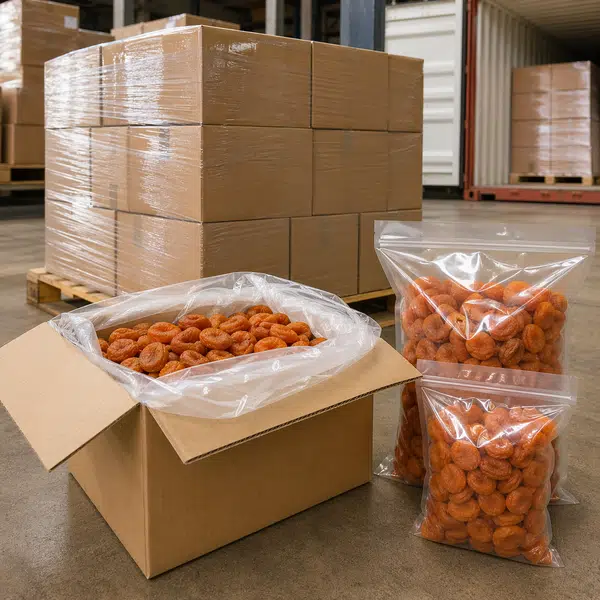
Cartons and pallets should be arranged so the load remains commercially stable throughout handling, loading, sea movement and unloading.
A practical commercial guide to container loading, transit protection and destination storage for Malatya sun-dried apricots, with buyer-focused advice on packing stability, warehouse handling and continuity protection.
In dried fruit export, product quality is not protected by specification alone. It also depends on how the goods are packed, loaded, transported, received and stored after arrival.
Malatya-origin sun-dried apricots are shipped into many different markets and channels, including retail, foodservice, private label, repacking and industrial ingredient use. Because these programs often involve sea freight, warehouse holding and onward distribution, the logistics chain becomes an important part of the commercial outcome. A sound fruit specification can still be undermined if the shipment structure is weak, if the loading environment is unsuitable or if the product is stored poorly after arrival.
That is why container loading, transit and storage should be treated as part of the product program rather than as a separate operational issue. Buyers who think about shipment discipline early usually protect continuity more effectively, especially when the program includes recurring containers, seasonal stock building or long-distance destinations. They also reduce the risk of confusing a logistics problem with a sourcing problem.
In practice, the most important logistics questions are usually simple. Is the product packed appropriately for export movement? Is the pallet and carton structure stable enough for the transit profile? Is the container clean and suitable for food cargo? Is the destination warehouse prepared to receive and store the goods properly? These questions matter because dried fruit remains commercially sensitive to environment, handling and storage discipline even when it is shelf-stable as a category.
Atlas covers this topic separately because many shipment-related problems can be reduced through better planning at the quotation stage. When the buyer shares the route, program type, pack format and expected storage conditions, the supplier conversation becomes more practical and more protective of the final commercial result.
The main objective of export loading is not simply to fill space. It is to move the product safely and consistently through transit without avoidable stress on the goods or packaging.
Cartons and pallets should be arranged so the load remains commercially stable throughout handling, loading, sea movement and unloading.
The container should be clean, dry and appropriate for food cargo so the fruit is not exposed to avoidable contamination or environmental risk.
The packing structure should support the transit profile of the shipment and not rely on minimal protection where longer movement or storage is expected.
Well-structured pallets usually make loading, unloading and destination warehousing more efficient and reduce handling stress.
Recurring programs benefit when each container follows a repeatable loading structure rather than varying from shipment to shipment.
Clear lot structure and organized shipment execution support better receiving control and easier follow-through at destination.
The correct pack format should match not only the sales channel, but also the shipping and storage conditions the apricots will face.
Retail packs, bulk cartons, foodservice units and industrial packs do not behave in exactly the same way in export logistics. A structure designed mainly for shelf presentation may not offer the same transit efficiency as a format designed for recurring warehousing and long container movement. Likewise, a pack intended for bulk redistribution may offer strong logistical practicality but not the same direct consumer presentation value.
That is why buyers should think about logistics at the same time as they define the commercial pack structure. If the program involves longer routes, multiple storage points or delayed release after arrival, the protective value of the packaging becomes more important. The strongest commercial result usually comes when the packaging format supports both market presentation and shipment discipline, rather than optimizing only one side of the equation.
Most dried fruit transit issues are not dramatic, but small weaknesses in handling or storage discipline can still reduce commercial performance.
Sun-dried apricots should be protected from unnecessary moisture exposure during transit, loading and warehouse storage.
Poor pallet discipline can create avoidable carton stress, movement risk and receiving inefficiency at destination.
A container that is not properly prepared for food cargo can create preventable transit issues before the vessel even departs.
Even after arrival, the commercial condition of the product depends on how well warehouse discipline is maintained before release or distribution.
Transit protection does not stop at the port. The destination warehouse and internal handling system are equally important.
The consignee should be ready to inspect, unload and move the cargo into appropriate storage without unnecessary delay.
The warehouse should be suitable for dry food storage and should protect the product from avoidable environmental stress.
Sun-dried apricots should be kept in a dry, clean and well-managed storage environment consistent with good warehouse practice.
Programs perform better when warehouse release discipline is clear and older stock is not left unmanaged behind newer receipts.
If the product will be repacked or redistributed, internal handling should be planned so the cargo is not exposed unnecessarily.
Clear lot separation and recording support better inventory management and smoother recurring program control.
Recurring buyers usually protect product condition more effectively because logistics discipline becomes part of the annual commercial structure.
Buyers running annual or recurring programs often perform better in logistics because they standardize their pack structure, pallet logic, shipment rhythm and receiving process over time. This reduces variability and makes each new shipment easier to manage. It also helps the supplier understand the actual operational model instead of treating each container as a one-off transaction.
In contrast, repeated spot purchases with changing pack formats or inconsistent destination handling can create avoidable friction. The product itself may be fine, but the program becomes operationally weak because the transit and storage logic has not been stabilized. That is why long-term buyers often discuss logistics expectations as part of the supply structure, not only after the order is already in motion.
Most shipment-related problems come from weak planning discipline rather than from the fruit category itself.
The shipment plan may look acceptable on paper but still perform weakly if destination storage conditions are not ready or suitable.
A pack chosen only for presentation or price may not be the most resilient option for long-distance movement and storage.
Weak pallet consistency can create avoidable inefficiency in loading, unloading and warehouse stacking.
Delays after arrival can weaken overall shipment discipline and make follow-up inventory control more difficult.
When older and newer arrivals are not managed clearly, continuity and lot discipline can become weaker over time.
Shipment success improves when the supplier understands the destination model early, not only after loading has already begun.
The more clearly the destination model is described, the more useful the shipment structure usually becomes.
Explain whether the shipment is for retail packs, bulk redistribution, foodservice, private label or industrial use, because this influences pack and handling logic.
Share whether the cargo will move directly to sale, into warehouse holding, into repacking or into a multi-step distribution chain.
Clarify preferred pack structure, pallet preference, annual volume direction and whether the program is a one-off shipment or part of recurring flow.
A strong logistics discussion should connect product profile, pack structure and destination handling into one coherent shipment plan.
Confirm the pack format, carton structure, pallet logic and whether the container is part of a recurring program or a one-off movement.
State the route logic, expected destination handling pattern and whether the cargo will be released quickly or stored for a longer period.
Share the destination storage model, stock rotation expectations and whether the apricots will be repacked, redistributed or sold in the received format.
These are the main points buyers usually need before structuring export loading, transit and destination storage for sun-dried apricots.
Sun-dried apricots depend on sound packing, stable loading and sensible destination handling, not only on the original product specification.
The right format is the one that supports both the channel objective and the actual transit and storage conditions.
Good receiving, dry storage discipline and clear stock rotation are essential for maintaining commercial continuity after arrival.
When pallet logic, pack structure and storage expectations are standardized, shipments tend to move more smoothly and predictably.
Short answers for importers, distributors, warehouse teams and recurring buyers reviewing shipment protection and storage discipline.
Buyers should clarify end use, target market, desired grade, sulfur-free or other quality profile, required certification scope and preferred pack format before requesting a quotation.
Because shipment performance affects final product condition as much as the original specification. Container loading, transit protection and destination storage discipline all influence how reliably sun-dried apricots arrive and remain commercially usable.
The main priorities are stable packing, moisture protection, sensible pallet structure, clean loading conditions, controlled warehouse handling and consistent storage discipline after arrival.
In many cases yes, provided the product profile, certification requirement, packaging structure and shipment handling expectations are aligned with the customer requirement and the available sourcing program.