Seasonality still matters in a mature category
Sultana raisins may be commercially established, but new-crop timing, carryover stock and grade distribution still shape buying conditions throughout the year.
A practical buyer guide covering sultana raisin seasonality, harvest windows and crop planning, with focus on new-crop timing, grade availability, carryover management, annual programs and supply continuity.
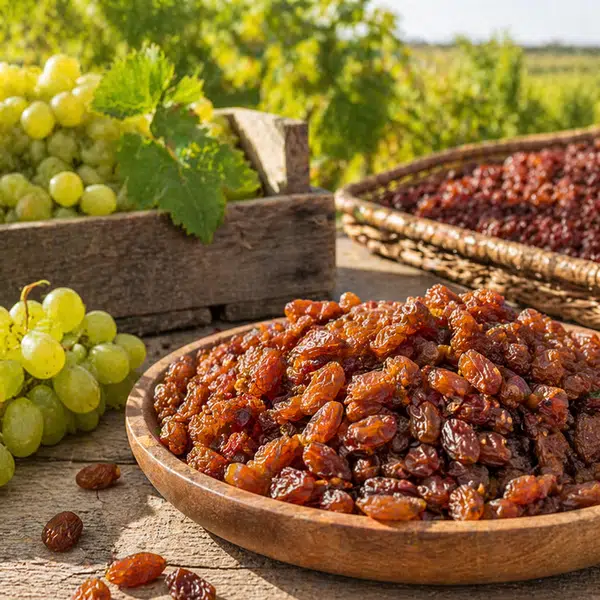
Sultana raisins are one of the most commercially established dried fruit categories, but they still follow a seasonal agricultural cycle that shapes availability, grade structure and purchasing strategy.
Turkish sultana raisins are widely used across bakery, confectionery, breakfast cereals, snacking, foodservice and industrial ingredient applications. Their seedless structure, broad grade availability and export familiarity make them highly adaptable, but that should not create the impression that supply planning is automatic. Sultanas are still tied to harvest timing, post-harvest processing, stock preparation and the annual rhythm of commercial demand. Buyers who understand that cycle usually source more effectively than those who treat the category as a flat year-round commodity.
Seasonality matters because it affects when new-crop fruit becomes commercially relevant, how old-crop and new-crop inventories are managed, how grades are allocated and when suppliers can give the clearest view on quality, continuity and packing schedules. Even in a relatively mature export category, harvest conditions can influence color profile, size mix, cleaning yield, packing availability and the commercial flexibility available to the buyer later in the season.
For importers, distributors and industrial users, crop planning is not just an agricultural topic. It directly affects annual pricing strategy, stock coverage, customer service reliability and the ability to support fixed product specifications across repeated shipments. Buyers who share realistic volume expectations and shipment timing early can usually create a more stable program than buyers entering the market only when stock is urgently needed.
This is why seasonality, harvest windows and crop planning deserve a dedicated article. The key commercial objective is not simply to buy after harvest. It is to understand when to define the requirement, when to discuss new-crop direction, how to manage carryover stock and how to align grade, packaging and shipment planning with the real demand cycle of the business.
These points help sourcing teams, importers and processors use the crop cycle more strategically.
Sultana raisins may be commercially established, but new-crop timing, carryover stock and grade distribution still shape buying conditions throughout the year.
Harvest and post-harvest timing influence grade readiness, pack planning, logistics scheduling and the supplier's ability to support repeat business.
Annual or forecast-based programs usually perform better than purely reactive spot inquiries, especially where pack format and grade consistency matter.
Buyers should use the crop calendar to align product expectations, shipment windows and stock coverage rather than treating the new crop simply as a marketing phrase.
Seasonality in raisins is the full commercial cycle from vineyard harvest to graded export stock, not just the picking period itself.
This is the period when grapes are harvested and moved into the drying and early handling stage that later defines raisin quality and commercial availability.
Commercial raisin availability depends on what happens after harvest as well, including drying, conditioning, cleaning, sorting and grading.
Buyers need to distinguish between new-crop readiness and immediate physical availability for shipment, because those are not always the same moment.
Stock from the previous cycle may continue to serve demand until new-crop product is fully ready, making transition planning commercially important.
Different grades and pack formats may become quotation-ready or shipment-ready at different times depending on processing and booking priorities.
Buyers often align their own procurement cycle with the crop calendar so they can balance pricing, stock cover and customer demand more effectively.
Harvest timing becomes commercially important because it shapes how and when supply can be discussed with real precision.
As crop direction becomes visible, buyers and suppliers can discuss likely color profile, grade yield, size range and commercial fit with greater confidence.
Forecasts tied to harvest and stock timing are usually more useful than generic volume discussions disconnected from the actual crop cycle.
Foodservice, bulk and private label requirements all benefit when packaging plans are matched to crop timing rather than handled only after the fruit is ready.
Harvest timing influences when suppliers can move from broad market talk to more specific program-based quotation logic.
Understanding the transition between old-crop and new-crop supply helps reduce supply gaps or rushed buying decisions.
Where organic and conventional business run in parallel, the harvest window helps buyers and suppliers structure each program more clearly.
Sultana supply is influenced by agricultural conditions, process capacity and the buyer's own program structure.
The size of the harvest influences how much flexibility is available across grades, markets and shipment timing throughout the year.
Even in a large crop, the commercial availability of tighter grades, specific size preferences or more demanding appearance profiles can vary.
Export supply depends not only on harvest size but also on how quickly fruit can be conditioned, cleaned, sorted and packed to the required standard.
Old-crop inventory influences the transition into new-crop business and can affect timing, continuity and the urgency of new bookings.
Organic and conventional programs may move on similar seasonal logic but with different volume depth, documentation flow and booking sensitivity.
Buyers serving bakery, cereal, seasonal retail or distributor channels may need different shipment timing even when sourcing from the same crop base.
For serious purchasing decisions, crop planning should connect supply-side facts with the buyer's own internal timeline: annual sales forecast, customer launches, warehouse capacity, packaging needs, contract windows and logistics rhythm. Without that connection, even a strong crop may not translate into a strong program.
Different commercial models interact with the crop cycle in different ways.
These buyers often benefit from annual or semi-annual planning because they need continuity, manageable stock rotation and freight efficiency across the full selling year.
Manufacturers need stable supply and specification consistency because raisins are often built into ongoing formulations and production schedules.
These programs usually need earlier alignment because unit packs, artwork, compliance review and replenishment timing must fit the crop and shipment cycle.
Organic business may require stronger early visibility so the fruit, documentation and packaging plan can be aligned to the intended market.
Spot buying can work for some short-term needs, but it usually offers less control over continuity, grade selection and shipment timing.
These buyers often need to balance crop timing with local labeling, repacking schedules and seasonal demand patterns across different destinations.
A clear planning framework usually delivers better supply continuity than repeated short-term purchasing.
Even an estimated annual volume range helps suppliers assess stock planning, packaging capacity and shipment sequencing more effectively.
A first container may be small, but if it is intended to lead into repeated business, that should be stated at the beginning.
Monthly, quarterly, campaign-based or seasonal shipments each require a different inventory and production planning approach.
Some buyers prioritize continuity across the transition, while others prioritize securing new-crop supply as soon as it becomes practical.
Bulk export, foodservice, industrial and private label requirements place different demands on scheduling and should be built into the program early.
Crop variation, processing timing and logistics pressure mean that strong programs usually leave room for adjustment instead of depending on exact minimum timing.
This is one of the most important commercial topics in raisin sourcing because it affects both continuity and expectation management.
Manufacturers often need stable supply and cannot easily stop production while waiting for new-crop stock to become shipment-ready.
Some channels place greater importance on moving into new-crop product as early as commercially practical, especially for marketing or seasonal reasons.
When the transition is discussed early, suppliers and buyers can manage stock coverage more smoothly instead of facing last-minute urgency.
Buyers should review whether the new-crop profile needs any adjustment in grade, appearance or pack timing compared with old-crop supply.
In practice, the best approach is usually not to treat old-crop and new-crop as separate isolated buying events. They should be part of one continuous program discussion covering demand, stock cover, shipment timing and the preferred commercial handover point between seasons.
Even in a stable export category like sultanas, each crop can still show meaningful differences that matter for buyers.
The season can influence the commercial color profile available across different raisin grades and channels.
Crop outcome may affect the balance between standard commercial grades and more selected specifications.
The proportion of crop that can be economically converted into tighter commercial grades can vary by season and condition.
Organic supply may be more sensitive to forward planning and channel demand even when conventional volume is broader.
The timing of cleaned, graded and shipment-ready stock can differ depending on crop flow and processing priorities.
Some years offer more flexibility for early planning, while others make buyers more dependent on disciplined forecasting and timely booking.
Many supply issues can be reduced by improving the timing and structure of the inquiry.
Although supply is broad and professionally organized, buyers still need to respect the crop cycle, new-crop timing and inventory transition logic.
Late buying can reduce flexibility in grade, packaging, scheduling and commercial negotiation, especially for structured programs.
Without planning the transition, buyers may face unnecessary supply gaps or mismatched expectations on continuity.
Even a broad annual forecast helps suppliers align stock and packaging more effectively than purely reactive spot requests.
A well-structured crop-planning discussion helps buyers and suppliers turn seasonal availability into a reliable commercial program.
Confirm the intended grade, application, appearance expectation, certification profile and whether the product is for retail, foodservice, bulk export or industrial use.
Share the likely annual volume, trial quantity and repeat shipment expectation so crop planning can be connected to real business demand.
Explain when the first shipment is needed, how continuity should be managed and whether the program needs to move into new-crop product at a defined point.
Clarify pack type, carton style, pallet preference and whether any private label or foodservice format requires earlier material planning.
State destination market, channel type and organic or conventional requirement so the right stock path and document flow can be considered.
Indicate whether the requirement is spot, seasonal, annual, contract-based or linked to a product launch so the supplier can respond on the right commercial basis.
Atlas treats seasonality and crop planning as active parts of the raisin supply strategy, not as background information.
Atlas Global Trading Co. supports buyers by connecting sultana raisin sourcing decisions to the realities of the crop cycle. That means helping define the appropriate product brief, reviewing timing around old-crop and new-crop supply, aligning organic or conventional requirements, considering pack-format needs and structuring the conversation around continuity rather than only around short-term market signals. This is especially useful for importers, distributors, food manufacturers and private label buyers who depend on steady availability across more than one shipment.
The goal is practical and commercial: reduce avoidable urgency, improve forecast visibility, protect specification fit and create a sourcing framework that works across harvest timing, cleaning readiness, packaging and export execution. When the crop cycle is understood and planned properly, sultana raisins become easier to buy, easier to schedule and easier to support throughout the year.
Short answers help buyers review the topic quickly before moving into quotation and annual planning.
End use, target market, desired grade, required certification profile, preferred pack format and expected shipment timing should be clarified first.
Because sultana supply depends on harvest timing, post-harvest processing, available grade distribution and the buyer's annual planning cycle, not only on immediate spot price.
In many cases yes, provided the fruit, certification profile, pack format and commercial timeline are aligned with the customer requirement and available sourcing program.
Because crop timing influences new-crop availability, grade selection, carryover planning, packaging schedules, shipment timing and the supplier's ability to support annual or repeat programs.
No. Many programs are managed through a planned transition between carryover stock and new-crop availability, depending on continuity needs and application priorities.
A realistic annual volume estimate, early discussion of shipment rhythm, clear grade definition and a practical strategy for the old-crop to new-crop handover usually improve results.