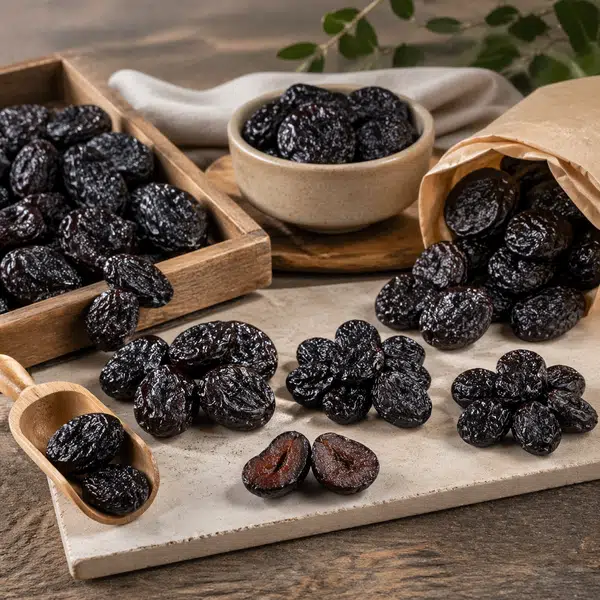
Prunes are a mature international dried fruit category, but they are not a simple commodity once a buyer starts defining the actual requirement. Two customers may both ask for prunes, yet one may need visually uniform, larger fruit for consumer packs while the other needs cost-efficient fruit for dicing, paste, bakery filling or ingredient use. Without a precise specification, price comparisons become misleading and offers may not be commercially aligned.
In practice, prune buying decisions usually depend on a combination of size, moisture, texture, sweetness, color, defect tolerance, pit status, microbiological expectations and final packaging. Large and attractive fruit may fit premium retail, while smaller count sizes or more commercially tolerant grades may be suitable for foodservice, industrial processing or conversion into puree, paste or chopped ingredients.
For importers and distributors, understanding grade language also helps reduce avoidable claim risk. Appearance, stickiness, free-flowing behavior, fruit integrity and rehydration response all influence performance after arrival. The correct commercial discussion should therefore include not only origin and price, but also intended application, acceptable defect levels, pack style, destination climate, storage expectations and shipment rhythm.
At Atlas, prune discussions are structured around use-case fit. This approach helps buyers compare offers on a like-for-like basis and makes it easier to move from initial inquiry to approved sample, production slot and repeat shipment program.