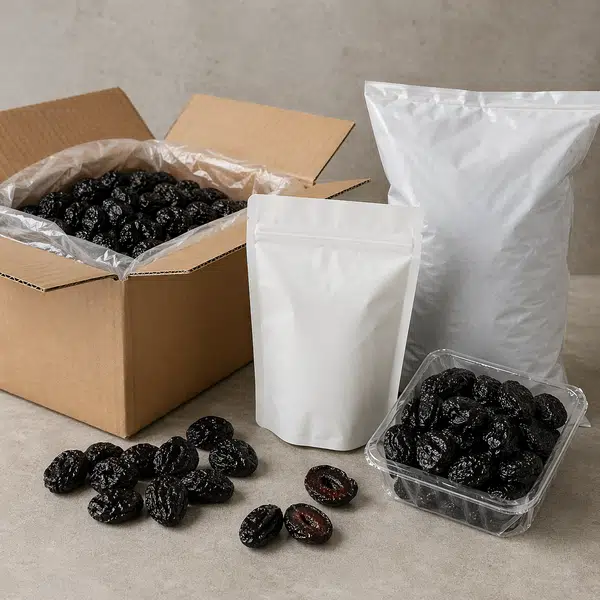
Prunes are naturally soft, dense and moisture-sensitive dried fruits. Because of these characteristics, packaging selection has a direct effect on product protection, sticking behavior, visual appeal, shelf-life management and ease of use in the destination market. A prune program can be commercially sound in terms of fruit quality, yet still underperform if the packaging is not suited to the sales channel or logistics route.
For foodservice, packaging is usually expected to support efficient handling, sensible portion management, product protection after opening and storage practicality in professional kitchens, hospitality operations and institutional environments. In retail, packaging must also communicate value on shelf, support branding, carry legally compliant product information and present the prunes in a way that reassures the consumer on freshness and quality.
Buyers often compare prune offers primarily on price, but the real commercial comparison should include pack size, film or bag structure, carton strength, labeling requirements, pallet efficiency, shelf presentation, consumer convenience and the ability of the selected packaging to protect the fruit throughout storage and transport. The right prune packaging format helps reduce damage, minimize complaints, improve handling and make the total program more competitive.
At Atlas, packaging conversations are approached as part of the total commercial brief. Product grade, moisture profile, size, pitted status, target market, route to market and delivery rhythm all influence which packing solution makes the most sense.