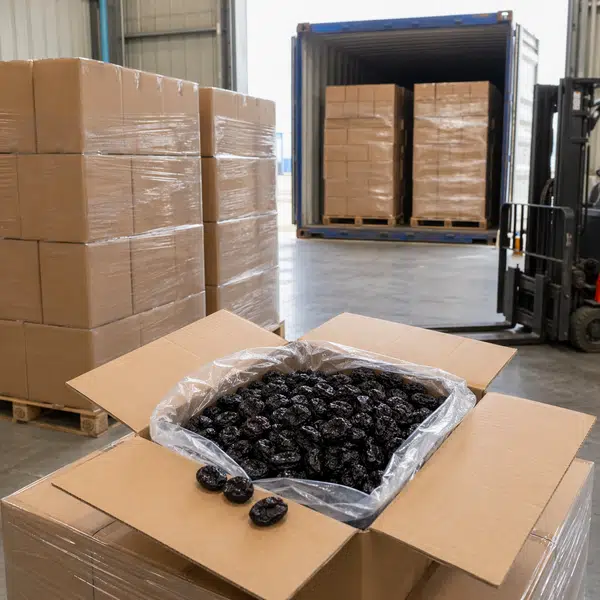
Prunes are a shelf-stable dried fruit, but that does not mean they are logistics-insensitive. Their natural sugar content, soft structure and moisture profile mean that loading conditions, packaging integrity, transit exposure and warehouse handling can materially influence how the product arrives and how it performs later in retail, repacking or industrial use. A shipment can leave in sound condition yet create avoidable issues if container loading, transit planning or storage discipline are weak.
In commercial practice, prune quality is shaped not only by fruit grade and packing format but also by how the goods are palletized, how the container is prepared, whether the load is protected against heat and condensation, and how quickly the goods are rotated after arrival. These details matter for importers because complaints are often linked less to the fruit itself than to packaging damage, stickiness increase, compression, carton weakening, odor pick-up or poor storage after discharge.
For that reason, buyers should not view container loading and storage advice as an operational afterthought. It is part of the total sourcing decision. The same prune specification may perform well on one route and poorly on another if climate, transit duration, warehouse conditions or handling discipline differ. Strong logistics alignment helps reduce claims, preserve usable shelf-life and support repeatable supply programs.
Atlas treats logistics as part of commercial fit. Pack type, destination, transit season, warehouse profile, target shelf period and end use all influence how prune shipments should be prepared and managed.