One commercial framework
The buyer defines one supplier discussion covering target channels, annual volume logic, pack formats, required certifications, documentation standards and shipment expectations across the portfolio.
A strategic sourcing guide for buyers who want one structured supplier conversation across apricots, figs, raisins, mulberries, cherries, kernels and dates, without losing product-level control.
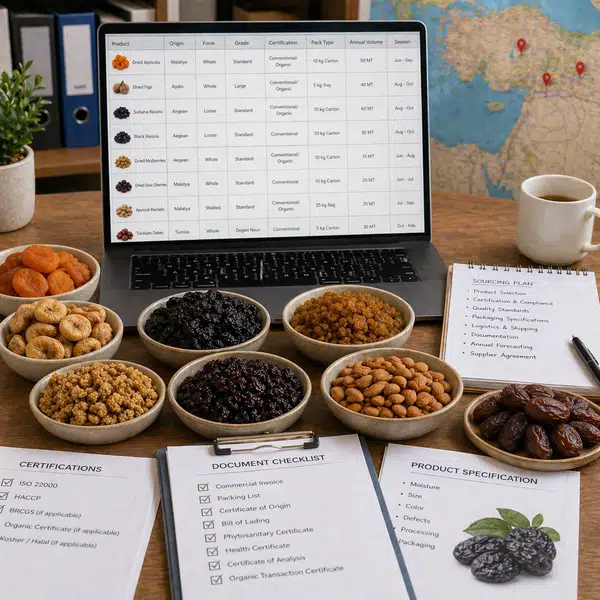
Buyers increasingly prefer fewer, stronger supplier conversations, but they still need technical discipline by fruit.
A mixed dried fruit sourcing program makes it easier to align freight, documentation, supplier communication, annual budgeting and launch timing across several categories instead of managing each fruit as an isolated purchasing project. Rather than sourcing apricots, figs, raisins, mulberries and complementary items through disconnected channels, buyers can create a more coherent commercial structure around one central sourcing discussion.
That does not mean treating all fruits as interchangeable. A good portfolio program is not a shortcut around product expertise. It is a framework that lets the buyer coordinate multiple fruits under one supplier relationship while still preserving fruit-specific rules on grade, sizing, moisture, pack format, certification, quality control, seasonality and shipment timing.
Commercially, mixed programs support better forecasting and a clearer annual view of spend. Buyers can compare harvest windows, match product launches to shipment availability, reduce duplicated communication, consolidate samples and discuss packaging, compliance and logistics in a more unified way. This is especially useful when combining Malatya apricots, Aydin figs, Aegean raisins and selected supporting lines such as mulberries, cherries, kernels or dates.
For Atlas, this topic matters because the platform is positioned as a portfolio supplier conversation rather than a single-SKU website. The navigation, product architecture, quality section, process pages and knowledge library all signal that the company can support broader dried fruit planning, not only individual spot quotations.
It is not simply buying many fruits at once. It is building one operating model across multiple fruit categories.
The buyer defines one supplier discussion covering target channels, annual volume logic, pack formats, required certifications, documentation standards and shipment expectations across the portfolio.
Each fruit still needs its own specification structure covering size, grade, moisture, defects, format and end-use fit. Portfolio efficiency should never replace technical clarity.
Where appropriate, container strategy, palletization logic, document preparation and shipment scheduling can be coordinated across several SKUs instead of repeated fruit by fruit.
Mixed programs help buyers map the year more effectively by showing when each fruit is most commercially available, when packaging decisions need to be made and when combined loading may be practical.
Some fruits combine naturally because buyer channels, origin logic and pack requirements often overlap.
Often serve retail, foodservice, repacking and industrial channels. They are frequently central to portfolio discussions because they can anchor both conventional and organic conversations.
Work well in mixed programs where buyers want a stronger Mediterranean dried fruit portfolio. They often share similar retail and health-positioned channels with apricots and mulberries.
Useful because they can serve snack, bakery, cereal, repacking and industrial demand. They also help broaden volume planning and create more flexible mixed-container options.
Usually a smaller-volume line, but commercially valuable in natural, premium or organic assortments where buyers want portfolio depth beyond the most common dried fruits.
Suitable as supporting items for ingredient, snack or specialty retail channels. They can add portfolio differentiation, but often require their own pricing and processing discussion.
Kernels and dates may complement the offer when buyer channels overlap, though they usually need more careful application screening because their technical and regulatory profile may differ from standard whole dried fruit lines.
Turkey offers breadth, but the real advantage comes from knowing how different regional supply bases fit different fruits.
Turkey is well positioned for mixed dried fruit sourcing because several major dried fruit categories are commercially established within the country, yet each one has its own production geography, supply culture and export handling logic. A strong portfolio conversation does not mean claiming that every fruit comes from the same local base. It means understanding how Malatya, Aydin, the Aegean region and other relevant sourcing zones contribute to the wider offer.
For buyers, this matters because mixed sourcing should not create a false impression of single-origin simplicity. The real value lies in coordinated management across complementary origins, processors and export routines. Apricots may be commercially associated with Malatya, figs with Aydin, raisins with the Aegean supply base and other fruits with their own more specialized networks. A capable portfolio supplier should be able to manage this complexity without presenting it as confusion.
From a commercial angle, Turkey also supports portfolio programs through established export experience, broad product familiarity in international markets and the ability to discuss conventional, organic, bulk and private label structures within one sourcing dialogue. This gives buyers room to build a broader procurement plan while still maintaining fruit-specific control.
The most effective mixed programs begin with how the buyer sells, not with how many products can be listed.
Retail-driven programs typically need stronger harmonization on appearance, labeling, pack sizes, private label readiness, claim management and shelf-life presentation across the portfolio.
Foodservice portfolios may focus more on handling practicality, intermediate pack sizes, value consistency and operationally efficient shipment patterns than on retail presentation.
Industrial users often need fruit-specific functionality for each SKU, but still benefit from one centralized supplier discussion covering documentation, shipment coordination and approval discipline.
Importers and distributors serving several channels should segment the fruit list by destination use early. One fruit may be for retail, another for bakery, another for repacking. This prevents a confused quotation structure.
A portfolio quote is only useful when the specification logic stays clear fruit by fruit.
One of the most practical ways to structure a mixed dried fruit program is to create a specification matrix covering each fruit line separately but within one shared document set. Instead of sending scattered requests, the buyer can define product name, grade, size, moisture style, pack type, annual volume, certification requirement, target market and intended end use for each item in a coordinated format.
This approach gives the supplier a better chance of returning a coherent proposal rather than a group of loosely related price indications. It also helps buyers compare products internally, plan annual budget ranges and identify where common packaging, labeling or shipment logic may be possible. Most importantly, it avoids a common portfolio-buying mistake: broad commercial ambition with vague technical input.
For example, a buyer may combine consumer-pack dried figs, bulk sultana raisins, organic sun-dried apricots and industrial dried cherries in one supplier conversation. That is commercially valid, but only if each line has its own clear technical and channel definition. Portfolio sourcing works best when shared commercial logic sits on top of separate product discipline.
When well organized, multi-fruit sourcing can create meaningful operational and financial efficiencies.
Buyers can reduce duplicated quoting cycles, repeated sample requests and fragmented communication by concentrating related fruit categories into one structured relationship.
Portfolio programs improve budgeting because buyers can review multiple product lines, seasonal purchasing windows and packaging decisions in one commercial calendar.
Where timing and pack formats allow, mixed programs can support more efficient container building, shipment sequencing and loading utilization.
Supplier approval, documentation templates, label review logic and recurring export paperwork can often be streamlined across the portfolio.
Discussing several products together gives both buyer and supplier a more strategic commercial framework than isolated spot negotiations on one fruit at a time.
Once the relationship is structured correctly, buyers can add new dried fruit lines more easily than if every new item requires a fully separate supplier setup.
A mixed program is useful only if it respects the fact that different fruits behave differently.
Not all fruits are commercially best purchased, packed or shipped at the same point in the year. Seasonal availability should shape the program calendar.
One common carton or consumer pack format may work for several lines, but not for all. Fruit softness, stickiness, size and presentation needs must still be considered separately.
Apricot sulfuring, fig layering, raisin cleaning, mulberry fragility or cherry processing profile all require different technical conversations. Mixed sourcing should not flatten those distinctions.
Some portfolio items may be core annual volume lines, while others are specialty or seasonal support items. Quotation logic should reflect that difference.
Freight benefits only appear when shipment logic is realistic for timing, packaging and demand cycles.
Mixed-container planning is often one of the main reasons buyers explore portfolio sourcing, but it should be approached carefully. Just because several fruits can theoretically travel in the same container does not mean they should always be loaded together. Shipment timing, packaging strength, order urgency, stock rotation and seasonal heat exposure still matter.
In practice, buyers should separate the portfolio into three groups: items that can often ship together, items that may ship together depending on timing, and items that are better handled in separate seasonal waves. This prevents overcomplicated loading plans that delay dispatch or create warehouse imbalance after arrival.
A sound mixed program also considers destination-side operations. Importers need to ask whether the receiving warehouse, repacking line or sales plan actually benefits from combined arrivals. In some cases, the right solution is not one container mixing everything, but one annual supply conversation with several well-timed shipments across the year.
Portfolio sourcing becomes much easier when the document logic is aligned early.
Buyers should define which certifications, declarations and technical documents apply across all lines and which are fruit-specific or channel-specific.
If the portfolio includes both organic and conventional items, documentation, label control and transaction discipline should be clearly separated from the beginning.
Using a common supplier approval and specification structure reduces repeated onboarding work and helps keep the portfolio commercially coherent.
Multi-fruit shipments can create more paperwork complexity, so lot references, case markings and shipment records must remain clear by SKU.
Retail and private label programs usually need artwork control by fruit, but legal text logic and approval sequencing can still be organized within one portfolio process.
When documents are prepared in a coordinated way, buyers can review, clear and archive product files more efficiently across the annual program.
A strong initial brief produces a much more usable portfolio quotation.
Identify which fruits serve retail, foodservice, industrial, wholesale or repacking channels so the offer can be structured according to actual commercial use.
Separate core annual lines from opportunistic or exploratory items. This helps the supplier distinguish between quotation-critical products and secondary additions.
List mandatory certification, quality and packing requirements by fruit. A mixed program works best when each SKU still has a clear technical identity.
Estimate whether products should ship together, in separate seasonal waves or in rolling replenishment cycles based on demand and stockholding capacity.
Clarify whether the inquiry is for a trial, a first-season launch, a recurring annual program or a consolidation of existing purchasing across several suppliers.
Define which approvals, declarations, certifications and label controls apply at portfolio level and which apply only to selected fruits.
Most problems come from oversimplification, not from the idea of portfolio buying itself.
A single generic request for many products usually produces a weak offer because each fruit needs different technical and commercial detail.
Buyers sometimes assume the whole portfolio can be quoted and shipped under one timing model. In reality, crop windows and carryover logic vary.
Trying to force all items into one mixed container can create more operational difficulty than value if order readiness and stock turnover do not match.
When retail, industrial and foodservice requirements are blended together in one fruit list, price and quality comparisons become less useful.
Good mixed programs may span several regional supply bases. Simplicity should come from coordination, not from pretending all fruits share identical origin logic.
Portfolio sourcing becomes inefficient if certifications, label approvals and shipment documents are discussed only after the product shortlist is made.
A well-prepared inquiry produces a better portfolio quotation and a more realistic supply plan.
Confirm which fruits are core lines, which are support lines and which are exploratory products for future range development.
Provide approximate annual volume or seasonal demand by fruit so the supplier can distinguish between strategic and occasional lines.
Share whether the program is bulk, foodservice, retail, private label or mixed-format, and whether any common packaging logic is desired across the portfolio.
State whether the portfolio is conventional, organic or mixed, and note any customer-specific approval requirements that will shape the sourcing conversation.
Clarify whether the goal is container consolidation, seasonal separation, staggered replenishment or simply one supplier relationship with separate shipment timing.
Explain whether the goal is supplier reduction, budget visibility, range expansion, margin improvement, supply continuity or a stronger private label platform.
These points make the page practical for importers, distributors and brand teams planning a broader dried fruit portfolio.
The value comes from one organized supplier framework across several fruits, while preserving technical control line by line.
Turkey can anchor a broad dried fruit conversation across several categories, especially when regional sourcing strengths are understood correctly.
The right portfolio should be built around how each fruit is sold and used, not simply around how many products can be listed together.
Each fruit still needs its own grade, size, moisture, packaging and compliance definition within the broader sourcing framework.
Mixed loading can create value, but only when order readiness, packaging and destination operations support it.
When buyers organize the portfolio by channel, timing, certification and product priority, suppliers can respond with much more useful commercial proposals.
A small FAQ keeps the page searchable, practical and commercially relevant.
A mixed program can simplify supplier communication, documentation flow, container planning, quality alignment and annual budget visibility across several dried fruit categories.
Apricots, figs, raisins, mulberries, cherries, kernels and selected complementary items such as dates can fit well when the buyer's channels, pack formats and compliance profile overlap.
No. Strong mixed programs often combine multiple Turkish supply bases such as Malatya, Aydin and the Aegean region, and may also include complementary non-Turkish items where commercially sensible.
One common mistake is assuming all fruits can be quoted, packed and shipped under the same specification logic. Each fruit still needs its own technical, seasonal and commercial treatment within the broader program.
Not necessarily. The best mixed program may include some consolidated shipments and some separate seasonal shipments depending on readiness, packaging, demand timing and destination stock planning.
Yes, in many cases, provided the documentation, certification flow, labeling controls and product-level sourcing structure are clearly defined from the beginning.
Share your fruit list, target channels and annual structure to move from isolated requests to a workable sourcing framework.
Atlas Global Trading Co. supports buyers who want to move beyond single-item purchasing and build a more coherent dried fruit supply conversation from Turkey. When the product list, channel priorities, pack formats, certification profile and shipment logic are shared clearly, it becomes easier to structure a realistic mixed program across core and complementary fruit categories. That improves quotation quality, reduces repeated supplier setup work and creates a better foundation for annual purchasing continuity.