Acid-sweet contrast
The tart character of sour cherries can balance sweeter confectionery bases and help prevent products from tasting flat or overly sugary.
A practical trade and sourcing guide for confectionery buyers evaluating how dried sour cherries perform in inclusions, coated products, centers, fillings, premium snack confectionery and fruit-led sweet applications.
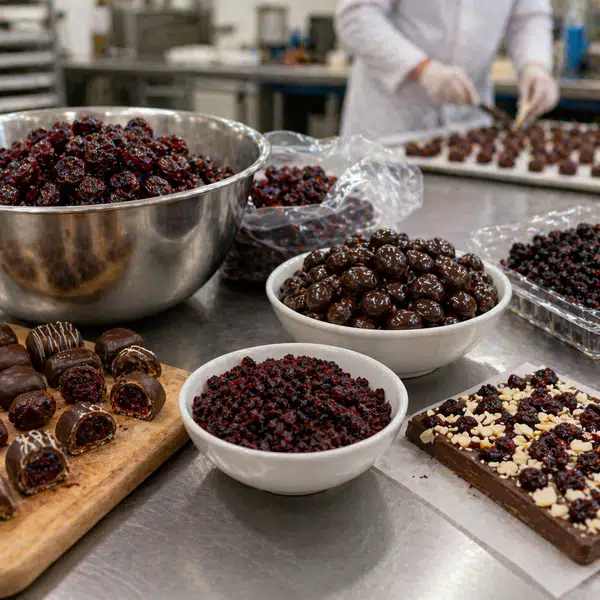
Dried sour cherries can add real value in confectionery, but only when the fruit format matches the process, recipe and final eating experience.
Dried sour cherries can sit in several value chains at once, from premium retail snacks to industrial ingredient use, but confectionery applications have their own technical and commercial demands. The fruit brings acidity, color contrast and a distinctive flavor profile that can help confectionery products stand out in a crowded category. That makes it attractive for manufacturers looking to break sweetness monotony, create a premium fruit identity or build a more differentiated taste profile in bar, cluster, coating or center applications.
For that reason, buyers usually need a more detailed conversation than simply asking for a price per kilogram. They need to define how the fruit will be used, whether it will remain visible in the finished product, whether it needs to be whole or processed, how much surface stickiness is acceptable, what moisture style is required and how the ingredient will behave during mixing, depositing, cutting, coating or enrobing. A dried sour cherry that works well in a snack mix may not be the right fit for a chocolate-coated line or a confectionery center.
When discussing dried sour cherries for confectionery, the first question is application fit. Some manufacturers care primarily about flavor impact and tart contrast, while others focus on machinability, inclusion stability, size regularity, coating compatibility or center integrity. Atlas presents these distinctions clearly so buyers, R&D teams and sourcing managers can structure a more commercially relevant inquiry from the beginning.
Commercially, successful confectionery programs are built around timing, specification discipline and process alignment. Crop timing, carryover stock, product format, packaging style, destination requirements and annual usage profile all affect final competitiveness. A supplier discussion becomes much more productive when the buyer explains whether the requirement is for chocolate, sugar confectionery, snack confectionery, premium gifting, industrial fillings or another defined confectionery segment.
The fruit offers a combination of taste contrast, visible identity and premium positioning that many confectionery products need.
The tart character of sour cherries can balance sweeter confectionery bases and help prevent products from tasting flat or overly sugary.
The fruit brings strong visual identity that can support premium appearance in visible inclusion formats, mixed products and fruit-led confectionery concepts.
Sour cherry is a recognizable profile that can carry a more distinctive market story than generic red fruit positioning.
Depending on the format and moisture style, dried sour cherries can add chew, bite variation and fruit body to otherwise uniform confectionery systems.
The correct dried sour cherry format depends heavily on where the ingredient sits inside the final confectionery structure.
Dried sour cherries can be used in enrobed or coated formats where tart fruit contrast supports a richer chocolate profile and a more premium eating experience.
The fruit can work in nut-fruit clusters, cereal-based confections, premium snack bars and hybrid confectionery-snack products where visible pieces and flavor contrast matter.
Depending on the formulation approach, dried sour cherries may contribute to fruit-rich centers, soft fillings or layered confectionery where acidity improves overall taste balance.
Manufacturers may use sour cherries in fruit-led candy systems, mixed fruit pieces or specialty premium concepts where the fruit identity is part of the appeal.
In premium confectionery assortments and seasonal packs, sour cherries can support a more upscale fruit profile than standard sweet inclusions.
The ingredient also fits products that sit between confectionery and healthy snacking, especially when fruit visibility and tart character are part of the positioning.
In this category, ingredient performance matters just as much as flavor.
Confectionery buyers generally need more than an attractive taste description. They need dried sour cherries that behave predictably in production. That may include the right piece size for inclusion distribution, manageable moisture for mixing or cutting, controlled surface condition for coating lines, acceptable stickiness for handling and a flavor profile that remains clear after interaction with sugar, chocolate, fat systems or other inclusions.
For some applications, whole-fruit identity is important because the cherry needs to remain visually recognizable. In others, the fruit is more valuable as a process-ready ingredient with consistent piece dimensions, softer chew or better dispersion through a formulated matrix. What matters commercially is not whether one format is universally better, but whether the chosen format matches the exact confectionery use.
This is why dried sour cherry sourcing for confectionery should begin with the manufacturing process. A fruit that works in chocolate enrobing may not be ideal for bar cutting. A fruit that performs well in a filling system may not be optimal for a visible inclusion product. The best supplier conversations therefore start with application detail rather than a broad product label alone.
These are the practical points most likely to affect success in a confectionery line.
Moisture influences chew, stickiness, cutting response, coating performance and interaction with surrounding confectionery matrices. The right level depends on the application.
Size consistency helps with dosing, visual appearance, inclusion distribution and line predictability, especially in bars, clusters and deposited systems.
Surface tack, sugar profile and overall handling feel can affect flow behavior, coating adherence and machine cleanliness during production.
The fruit should retain enough tart-fruit character to remain noticeable after contact with chocolate, sugar systems, nuts or cereal bases.
For visible inclusions and premium formats, buyers often care about how the cherry color presents inside the final product or transparent areas of the pack.
Industrial users need to understand whether the fruit smears, clumps, tears or holds shape during mixing, cutting, sheeting or depositing operations.
Some products require the cherry pieces to remain visually distinct rather than break down into the matrix during processing or handling.
As with other food ingredients, the fruit should align with the buyer's technical and documentation expectations for the intended confectionery use.
Different confectionery systems place different demands on dried sour cherries.
In chocolate systems, manufacturers often want fruit that gives a clear tart contrast without creating excessive surface issues or disrupting coating consistency. Size and moisture control are especially important.
Clusters usually benefit from strong visual fruit identity, manageable piece distribution and flavor contrast that remains noticeable alongside nuts or seeds.
In bar systems, dried sour cherries may need to survive mixing and cutting while still providing visible fruit distribution and a balanced chew profile.
These uses often prioritize flavor release, fruit body and integration into soft systems rather than stand-alone piece identity.
Premium consumer-facing products often need stronger control on visual quality, pack presentation and taste definition because the fruit is part of the value story.
When the fruit is part of a larger formulation, manufacturers may focus more on process suitability, flavor contribution and cost-in-use than on premium whole-piece appearance.
The ideal confectionery ingredient is not the same for every buyer, because commercial structure changes what matters most.
The correct dried sour cherry specification for confectionery depends on whether the product is premium or value-led, whether the fruit will be highly visible or embedded within the matrix, whether the manufacturer is selling branded retail, private label or bulk industrial goods and whether the line is high-volume, seasonal or niche. These factors influence how much the buyer should invest in appearance, sorting, packing complexity and approval discipline.
For example, a premium chocolate line may justify tighter visible quality and stronger presentation value, while a large industrial confectionery line may prioritize consistent process behavior and cost efficiency over cosmetic perfection. Similarly, a private label confectionery project may demand broader documentation, more formal artwork coordination and tighter dispatch timing than a bulk ingredient sale into a manufacturing site.
This is why Atlas encourages confectionery buyers to define the business model as well as the product use. Good specification design starts with commercial reality, not only technical preference.
Factory use, handling conditions and annual demand profile should shape the pack strategy from the start.
Most confectionery manufacturers will prefer bulk export formats that support plant handling, storage efficiency and controlled ingredient release into the production flow.
Some users may need pack sizes that sit between full bulk export and small retail-ready formats, depending on plant scale and batch size.
Clear lot coding and document alignment are important for factory-side quality systems, especially where multiple finished SKUs may be produced from one incoming ingredient lot.
Confectionery manufacturers should match the fruit specification with realistic storage and handling practice so the ingredient remains usable through the intended production cycle.
Recurring confectionery lines usually perform better with annual or semi-structured ingredient planning than with purely opportunistic spot buying.
Holiday, gifting and premium promotional lines may require earlier booking because confectionery demand can concentrate in commercial peaks rather than spread evenly across the year.
Both can work well, but the planning logic is not always identical.
Conventional confectionery supply may allow broader sourcing flexibility in some cases, but buyers still need clear alignment on fruit format, process performance and commercial timing.
Organic confectionery projects often require tighter coordination around raw material allocation, certification, documentation, label language and process segregation where relevant.
Organic sour cherries may be particularly relevant in premium confectionery concepts where ingredient identity and cleaner positioning are part of the consumer value proposition.
Organic and specialty programs generally benefit from earlier volume forecasting and clearer reservation logic than reactive spot purchasing.
Many sourcing problems appear when buyers choose fruit on general appeal instead of process fit.
Asking for dried sour cherries without specifying the confectionery use often leads to a product that is technically acceptable but commercially misaligned.
Flavor alone is not enough. Cutting, coating, mixing and dosing performance can determine whether an ingredient succeeds on a production line.
Not every industrial confectionery application needs premium retail-style appearance. The right quality level should match the actual product architecture.
Factory-friendly pack formats, lot traceability and storage practicality are important operational details, not secondary concerns.
Confectionery lines tied to launch windows or holiday demand can suffer if ingredient sourcing starts too late in the crop-year cycle.
A buyer should distinguish clearly between a bulk industrial ingredient program and a finished-pack retail confectionery concept because the commercial requirements differ significantly.
A short checklist helps buyers and sellers move faster toward a technically useful and commercially relevant quotation.
Confirm whether the fruit is for chocolate, clusters, bars, fillings, sugar confectionery or another confectionery format.
Define the desired piece size, visible quality, sweetness balance if relevant, moisture style and whether the fruit must remain identifiable in the final product.
Share whether the fruit will be mixed, coated, enrobed, cut, deposited or used in a center system so the offer matches actual factory conditions.
Indicate bulk pack preference, plant handling requirements, pallet expectations and storage realities as early as possible.
State whether the inquiry is for a trial, recurring industrial order, annual contract, seasonal premium launch or private label confectionery line.
Clarify whether the program is conventional or organic and whether any specific technical or document requirements apply to the confectionery channel.
These points make the article immediately useful for confectionery manufacturers, R&D teams and sourcing managers.
Dried sour cherries can work very well in confectionery, but only when the fruit format matches the actual product architecture and processing route.
Moisture, piece size, tack, cutting response, coating compatibility and inclusion integrity can be just as important as taste.
Chocolate-coated lines, clusters, bars, centers and premium fruit confections all place different demands on the ingredient.
The right bulk format improves handling, storage, traceability and overall plant efficiency.
A premium visual specification may be right for one confectionery concept and unnecessary for another. The best program matches quality level to product value.
When buyers define the exact confectionery use, suppliers can recommend a far more relevant dried sour cherry format and commercial structure.
Short answers help buyers review the topic quickly and keep the page practical.
Buyers should first clarify the confectionery application, required product format, desired sweetness balance, moisture style, piece size, certification profile and preferred pack format.
Because confectionery applications have specific technical demands around moisture control, coating compatibility, cutting behavior, inclusion stability, flavor impact and processing performance.
They are used in fruit and nut clusters, chocolate-coated products, center fillings, inclusions for bars, snack confectionery, premium mixes and other confectionery concepts where acidity, color and fruit identity add value.
Not always. A fruit suited to chocolate enrobing may not be ideal for bar cutting or filling applications, so the exact product format should be matched to the process.
Moisture affects chew, stickiness, coating interaction, mixing behavior, cut response and overall factory performance, so it has a direct impact on application success.
In many cases yes, provided the fruit format, certification scope, process expectations and packing structure are aligned with the buyer requirement.