Loading affects delivered quality
Good product can still arrive in poor condition if pallet stability, carton strength, inner bag protection and loading discipline are weak.
A practical buyer guide covering container loading, transit handling and storage advice for dried sour cherries, with focus on packaging protection, pallet stability, condensation risk, warehouse control and delivered product consistency.
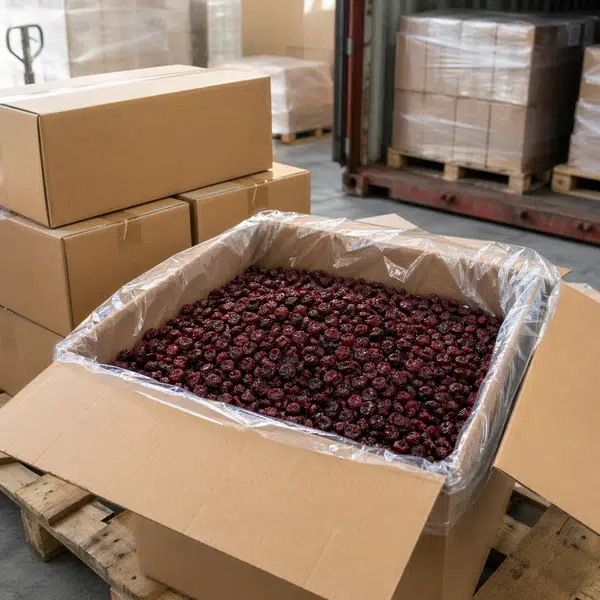
For dried sour cherries, delivered condition is shaped not only by product quality, but also by how the product is loaded, shipped, received and stored.
Dried sour cherries are a stable dried fruit ingredient when handled properly, but they are still sensitive to poor logistics discipline. Moisture migration, condensation, packaging damage, excessive stacking pressure, weak pallet stability and unsuitable warehouse conditions can all reduce product quality before the goods ever reach final use. In export business, it is not enough to discuss only fruit grade and price. Buyers also need clarity on how the product will move through the supply chain and what protections are built into the loading and storage plan.
This is especially important because dried sour cherries are sold into several channels at once. Retail and private label buyers may care strongly about outer pack appearance, shelf-life integrity and the condition of finished units on arrival. Food manufacturers and repackers may focus more on bulk carton condition, pallet consistency, manageable product texture and clean warehouse transfer into their own systems. In both cases, transit and storage performance affects commercial value, complaint risk and shelf-life confidence.
Container loading and warehouse advice matter because international shipments pass through multiple environments. Goods may leave a controlled packing area, move to a port, wait in hot or humid conditions, cross multiple climate zones and then be stored again before sale or processing. Without appropriate packaging, sensible loading practice and correct storage at destination, the quality seen in the production facility may not match the quality delivered to the customer.
For that reason, serious buyers usually evaluate logistics readiness as part of the product discussion. The correct commercial conversation includes packaging structure, pallet pattern, load stability, container cleanliness, transit duration, receiving checks and destination storage conditions. This helps protect the product and reduces avoidable commercial friction later.
These are the main points importers, distributors and processors should review before shipment planning.
Good product can still arrive in poor condition if pallet stability, carton strength, inner bag protection and loading discipline are weak.
Temperature changes and humidity exposure can create moisture-related problems if packaging and container planning are not appropriate.
Even after a good shipment, unsuitable warehouse conditions can lead to texture drift, clumping, packaging stress or reduced shelf-life confidence.
Shipment method, pack format, pallet configuration and destination conditions can all influence the right commercial offer.
Most shipment issues are linked to environment, handling pressure or packaging mismatch rather than the fruit itself.
If packs are exposed to unsuitable humidity levels or poor sealing conditions, product texture and handling behavior can change during storage or transit.
Temperature fluctuation between warm and cool environments can create condensation on or around cargo if loading and storage practices are not controlled.
Weak inner liners, poor seals, damaged pouches or crushed cartons can reduce product protection and increase handling losses.
Poor stacking pattern or weak pallet wrapping can lead to shifted loads, damaged cartons and more difficult warehouse handling.
Overstacking or weak carton design may compress product and deform finished packs, particularly in long export routes or multi-stage distribution chains.
Even a well-loaded shipment can deteriorate if stored in hot, damp or poorly managed warehouse conditions after arrival.
Loading decisions should protect both the packaging system and the fruit during the full transport cycle.
Containers should be dry, clean and free from residual odor, visible contamination or structural damage that could compromise food cargo.
Goods should be loaded in conditions that minimize unnecessary exposure to rain, surface moisture or uncontrolled humidity.
Pallets should be stable, evenly built and compatible with the chosen carton size so that weight is distributed properly and handling remains safe.
Case arrangement inside the container should support load stability, reduce crushing risk and maintain the integrity of finished packaging through the voyage.
Appropriate securing methods help reduce movement during transit, especially when shipments may experience vibration, handling shocks or route changes.
Loading should avoid careless gaps or unstable stacking patterns that can weaken cargo stability and increase damage risk during handling and unloading.
For dried sour cherries, loading is not just about maximizing fill. It is about creating a stable cargo unit that can cross long distances without unnecessary stress on the fruit or packaging. A very dense load may seem commercially efficient, but if it increases carton damage, product compression or unloading difficulty, the apparent gain may disappear through claims and losses.
Pallet and outer packaging design strongly influence the success of the shipment.
Outer cartons should be selected to withstand stacking, palletization and long-distance movement without losing structural integrity.
Bulk formats should use appropriate inner bag or liner systems to help protect the fruit from unnecessary exposure and handling stress.
Proper wrapping helps maintain load stability and reduces the chance of carton shift, abrasion or collapse during loading and unloading.
Where needed, additional support can help preserve pallet shape and reduce damage to outer cases during stacking and movement.
Uniform case arrangement improves container efficiency and simplifies receiving, warehousing and stock counting at destination.
The finished pallet should be practical for forklifts, warehouse racking and destination-side unloading methods.
Transit management should focus on preventing avoidable quality drift between dispatch and receipt.
Long exposure to excessive heat can affect product handling characteristics, packaging condition and overall presentation, especially in extended supply chains.
Products crossing different climates should be managed with attention to moisture exposure risk, particularly when cargo moves from warm to cooler environments.
Every transfer point increases the possibility of pallet damage, carton abrasion or seal stress. Efficient routing and careful cargo handling reduce this risk.
Accurate shipment documents, batch references and packing details support smooth customs and warehouse processing and reduce cargo delays.
Quotation and stock planning should reflect actual route timing, port handling risk and downstream receiving schedules rather than ideal transit assumptions.
Clear receiving guidance helps importers check pallets, cartons, coding and pack condition quickly and consistently on arrival.
Transit advice is especially important when a shipment is intended for retail-ready sale or time-sensitive production schedules. In these cases, even minor damage to outer packaging or slight product condition changes can create commercial problems beyond the direct value of the goods. Good shipment planning therefore protects both quality and market timing.
One of the most important shipment risks for dried fruit is uncontrolled moisture exposure caused by climate transitions.
When cargo moves across different temperatures, moisture can form on container surfaces or packaging if the environment changes too quickly or storage is not managed properly.
Condensation can affect carton strength, outer label condition, pallet stability and the protective value of the packaging system.
Dry cargo, dry packaging and careful loading into a suitable container reduce the starting risk before shipment begins.
Importers should avoid placing newly arrived cargo immediately into unsuitable storage conditions without checking the condition of the load first.
In practical terms, dried sour cherries are best protected when the full chain is considered together: production packing, warehouse hold, truck loading, port dwell time, ocean transit, unloading and destination warehousing. A shipment is only as strong as the weakest step in that sequence.
Good storage conditions help preserve texture, packaging integrity and commercial usability throughout the intended shelf life.
Warehouses should be clean, dry and managed to avoid avoidable heat build-up, moisture exposure and direct environmental stress on the cargo.
Food products should not be stored close to goods with strong or intrusive odors that may affect product acceptability or packaging freshness.
Palletized storage helps protect cartons from floor-level moisture risk and improves warehouse hygiene and handling efficiency.
Rough handling, sharp contact points or careless restacking can damage outer cartons and reduce the protection of the product inside.
Batch control and sensible stock rotation help maintain product freshness and reduce the risk of aged inventory remaining in the system too long.
Once bulk or foodservice packs are opened, they should be managed according to the user’s internal handling procedures to maintain product condition.
A structured arrival check helps identify logistics issues early and keeps claims discussions factual and well documented.
Review pallet stability, carton compression, wrapping condition, visible moisture signs and the general cleanliness of the load on arrival.
Confirm product identity, lot coding, quantity and labeling against shipment documents before the goods move deeper into the warehouse system.
Look for torn cartons, compromised pouches, broken seals or liner damage that could affect product protection.
If internal procedures require it, sample and inspect the fruit in a controlled way rather than relying only on external carton appearance.
Any transit or unloading concerns should be documented clearly at receipt stage to support fast resolution and accurate communication.
If part of the shipment appears compromised, buyers should isolate the affected units pending internal review instead of mixing them into regular inventory.
Logistics control is not only a quality issue. It also affects cost, claims exposure and continuity of supply.
The commercial value of dried sour cherries is tied to how the goods arrive, not just how they looked before dispatch.
Bulk density, carton size, pallet height and case strength can all influence loading efficiency and damage risk.
Two offers may not be equivalent if one includes better protection, stronger palletization or more suitable shipment preparation.
Buyers should align order size and pack format with their own storage and handling capacity to avoid avoidable deterioration after arrival.
Regular importers and distributors generally perform better when loading, receipt and storage procedures are standardized across shipments.
Clear logistics discipline often saves more value than aggressive spot-price negotiation because it reduces damage, dispute and replacement costs.
Many logistics issues can be reduced by correcting a few frequent commercial and operational errors.
The important result is delivered condition after transit, unloading and storage, not just pre-shipment appearance.
Even correctly loaded cargo can deteriorate if the importer’s storage environment is too warm, humid or poorly managed.
Lower packaging cost may not be a real saving if it increases the chance of compression, moisture exposure or handling damage.
Without a structured receiving check, it becomes harder to identify when and where an issue occurred in the supply chain.
A clear logistics briefing helps buyers and suppliers align on practical shipment conditions before the order is finalized.
Confirm the fruit profile, pack type and whether the goods are intended for retail, repacking, foodservice or direct industrial use.
Share the expected route, destination climate, timing sensitivity and whether the goods may face extended port or warehouse dwell periods.
Clarify carton strength expectations, liner type, pallet preference, wrapping standard and case marking requirements.
State the planned warehouse conditions and handling model at destination so the right packaging and shipment preparation can be proposed.
Confirm whether the buyer has standard inspection, sampling or quarantine procedures on arrival.
State whether the order is a trial shipment, a spot purchase or part of an ongoing program with repeated loading and storage needs.
Atlas treats loading, transit and storage advice as part of the supply offer, not as an afterthought.
Atlas Global Trading Co. supports buyers by linking product quality with realistic shipment execution. For dried sour cherries, this means helping define suitable pack formats, reviewing pallet and carton logic, considering route and destination conditions, and aligning the commercial offer with the practical risks of export movement and downstream storage. This approach is especially useful for importers, distributors and private label buyers who need consistency across repeated shipments rather than one-time spot performance.
The objective is simple: the product should arrive in a condition that supports sale, repacking or production without avoidable damage, delay or quality drift. Strong loading and storage discipline help protect margins, reduce claims and improve continuity across the full program.
Short answers help buyers review the logistics topic quickly before moving into shipment planning.
End use, target market, desired quality profile, required certification scope, packaging format, transit conditions and storage expectations should be clarified first.
Because loading pattern, shipping conditions, packaging durability, destination climate and warehouse practices can all affect delivered quality, shelf life and commercial performance.
In many cases yes, provided the fruit profile, packaging system, documentation and handling controls are aligned with the customer requirement and the target market.
Packaging integrity, pallet stability, moisture protection, condensation control, warehouse temperature discipline, stock rotation and careful loading and unloading practices matter most.
Because temperature shifts and humidity changes during storage and transit can damage cartons, affect pack condition and reduce the protective performance of the packaging system.
Yes. Good loading can be undermined by poor warehouse conditions, careless restacking or weak stock rotation after the shipment reaches destination.