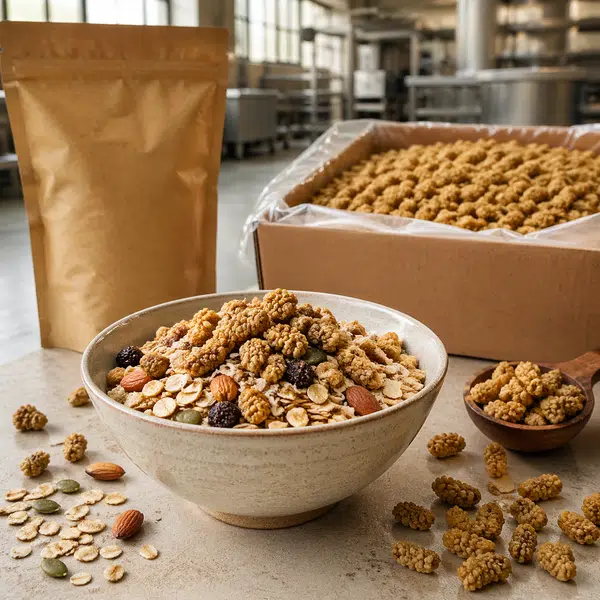
Dried mulberries are increasingly relevant to breakfast and snack mix manufacturers because they combine natural sweetness, a soft-to-chewy bite, visual differentiation and a label-friendly fruit identity in a single ingredient. Compared with heavier or more acidic dried fruits, mulberries can contribute a gentler flavor profile that integrates well with cereals, clusters, seeds, nuts, oats, puffed grains and other dried fruits without dominating the formula. This makes them commercially attractive for brands looking to build premium positioning while maintaining broad consumer acceptance.
From a formulation perspective, dried mulberries are especially useful where the product team wants fruit inclusions that feel natural, light and visibly premium. They can support muesli blends, granola lines, functional breakfast cups, no-added-refined-sugar concepts, fruit-and-nut mixes, trail mixes and selected better-for-you snacking formats. Their appearance helps create perceived value in transparent retail packaging, while their mild sweetness helps balance bitter, toasted or earthy ingredients such as cacao nibs, roasted seeds, bran-rich cereals and high-fiber inclusions.
From a commercial perspective, industrial buyers usually need more than a basic price offer. They need to understand usable grade range, product behavior in blending, tolerance for breakage, expected moisture, packing options, certification scope, microbiological control, shipment rhythm and how the product performs across different climate and logistics conditions. A good sourcing program for dried mulberries therefore depends on clear specification management from the start.
For manufacturers, the main advantage is not only the ingredient itself but the ability to place it correctly. When dried mulberries are matched to the right grade, moisture level and pack format, they can support premium product design, operational efficiency and more consistent purchasing decisions across repeated orders.