Muesli and cereal blends
Figs add visible fruit presence, natural sweetness and a premium ingredient story in dry cereal mixes where fruit distribution and pack presentation are important.
A practical industrial and trade guide for dried figs used in breakfast cereals, granola, muesli, trail mixes and fruit-nut snack blends where visible fruit character, manageable cut size and reliable supply continuity matter.
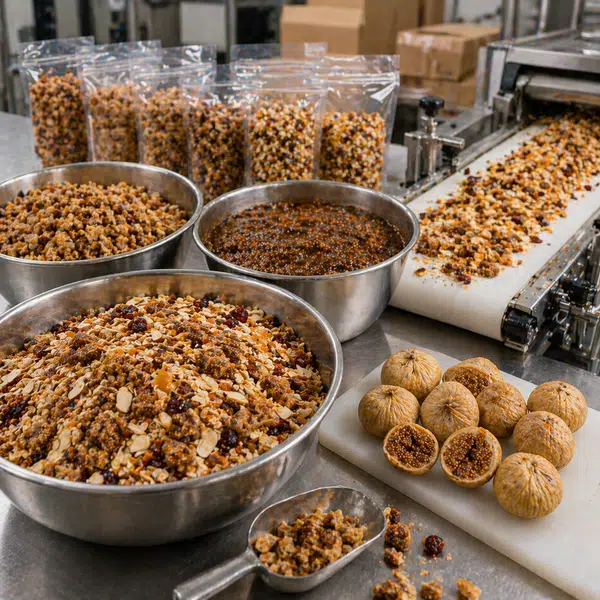
Breakfast and snack-mix applications require dried figs to behave consistently in blending, filling, packing and shelf presentation, not just taste good in isolation.
Turkish dried figs are strongly associated with Aydin and with a range of commercial formats including Lerida, Garland, Protoben, diced figs and fig paste. In breakfast and snack mixes, however, the key issue is not the traditional retail presentation format alone. The more relevant question is how the fig is prepared for industrial blending and how it performs alongside cereals, nuts, seeds, grains, clusters and other dried fruits.
Dried figs are especially attractive in these product categories because they offer natural sweetness, visible fruit identity, recognizable premium value and a flavor profile that pairs well with oats, nuts, seeds, cocoa, coconut, spices and wellness-oriented breakfast concepts. They can strengthen both mainstream mix formulas and more premium health-positioned ranges.
Still, industrial users cannot buy dried figs as a generic ingredient if they expect clean line performance and consistent finished packs. They need to define whether they require diced figs, smaller cut pieces or a particular size range for granola, muesli, breakfast cereal or snack-blend use. They also need to consider moisture balance, clumping tendency, dust generation, visual cleanliness, cut uniformity, microbiological suitability and the interaction of figs with the rest of the mix during transport and shelf life.
That is why a dedicated article is useful. It helps importers, processors, cereal producers and snack manufacturers evaluate technical fit, packing structure and commercial sourcing logic before moving into a formal quotation or annual supply discussion.
Dried figs can support multiple mix categories, but the best format depends on pack style, target consumer and processing method.
Figs add visible fruit presence, natural sweetness and a premium ingredient story in dry cereal mixes where fruit distribution and pack presentation are important.
In granola, fig pieces can contribute chew, fruit contrast and sweetness support. The main concerns are cut consistency, moisture interaction and how well the pieces retain their identity in the finished pack.
Dried figs can be used alongside raisins, mulberries, apricots, nuts and seeds to increase product differentiation and perceived value in snack blends.
Figs are particularly relevant in natural, wellness and fiber-focused products where the ingredient list and fruit profile are part of the brand message.
Controlled fig cuts can also be used in mix-in sachets, topper blends and premium breakfast applications where visual fruit identity is essential.
Figs work well in cross-category formats that sit between breakfast, snacking and healthy indulgence, especially where the product combines grains, nuts and fruit in one pack.
For industrial breakfast and snack applications, the format usually matters more than the traditional whole-fig retail identity.
The most relevant industrial format for many mix applications. Diced figs support even blending, repeatable dosing and visible fruit distribution when the size range is chosen correctly.
Suitable where the buyer wants a slightly larger, more premium visible piece but still needs manageable processing and consistent mix performance.
Useful for tighter cereal systems or denser blend matrices where piece size must remain subordinate to flow and pack balance.
Some buyers may require a custom cut logic depending on filling equipment, pack format or the target ratio between fruit visibility and process efficiency.
Less common for standard mixes, but still relevant in selected premium blends or gift-oriented products where a larger fruit presentation supports the concept.
Some producers use one fig format for cereal mixes and another for snack blends. These should be quoted and planned as separate industrial routes.
In these categories, the key issue is how the figs behave in the blend, in the pack and across shelf life.
Consistent sizing supports more even distribution, cleaner filling behavior and better finished-pack appearance. Wide cut variation can make the mix look less controlled and reduce dosing consistency.
Fig pieces should work within the chosen mix system without excessive bridging, clumping or line disruption. This becomes especially important in automated filling environments.
Moisture affects texture, piece stability and interaction with other dry ingredients. If the fruit is too soft, it may compress or clump. If too dry, it may fragment or lose eating quality.
Excess fines can affect pack appearance, blend uniformity and machine cleanliness. Industrial users usually prefer a format that remains visually clean and operationally manageable.
Breakfast and snack mixes often rely on visible fruit to support consumer appeal. The fig pieces should retain an attractive identity throughout filling, transport and shelf display.
Figs need to perform well next to cereals, oats, chocolate pieces, nuts, seeds and other dried fruits without creating excessive moisture transfer or visual imbalance.
As with other direct-food industrial ingredients, dried figs used in mix applications should meet an appropriate microbiological profile consistent with the buyer's manufacturing route.
Cleanliness is especially important where the fruit remains fully visible in transparent or semi-transparent consumer packs.
The fig format should continue to perform after the blend is packed, palletized and moved through normal distribution conditions without unacceptable breakdown or presentation loss.
Figs can contribute more than sweetness. They can elevate ingredient positioning, visual appeal and product differentiation.
Dried figs offer a more distinctive profile than some standard mix ingredients, helping brands create stronger category differentiation.
Figs contribute sweetness in a fruit-led format that fits well with breakfast and better-for-you snack positioning.
Turkish dried figs support marketing narratives around tradition, premium sourcing and recognizable fruit expertise.
The same sourcing relationship may support cereal mixes, premium granola, fruit-nut snack packs and seasonal breakfast concepts.
A strong breakfast and snack-mix quote starts with application clarity rather than a broad request for dried figs.
The first point is application type. Buyers should indicate whether the dried figs are for muesli, granola, cereal blends, fruit-nut snack mixes, topper blends or a specific premium snack concept. The second point is cut format. A request for dried figs alone is too broad when the वास्तविक need may be diced pieces, smaller industrial cuts or a controlled visible-premium format.
The third point is technical handling. Buyers should explain whether the figs will pass through dry blending, automatic dosing, vertical filling, horizontal packing or other specific handling stages. They should also define whether the priority is flowability, visual presence, softness balance or all of these together.
The fourth point is the channel and pack logic. A fruit piece intended for a transparent premium breakfast pack may need a different quality profile from one used in a cost-sensitive cereal blend. The fifth point is certification and annual volume. Organic versus conventional supply, together with a realistic forecast, helps Atlas prepare a more relevant offer.
Both routes are commercially viable, but the supply structure should match the final market position.
Organic dried figs are especially relevant in premium breakfast cereals, natural granola, wellness-led muesli and specialist snack products where certification and clean-label positioning are part of the commercial value. In these programs, buyers often place stronger emphasis on certification continuity, product presentation and documentation support.
Conventional dried figs are often suitable where the objective is competitive industrial sourcing for broader market cereal and snack-mix applications. In those cases, the main commercial focus may be cut consistency, packing efficiency, usable mix performance and delivered competitiveness rather than organic brand value.
Where a buyer operates both organic and conventional lines, the two routes should be separated clearly in forecasting, pack planning and documentation to keep execution smooth and channel-specific claims clean.
Industrial breakfast and snack-mix buyers usually need packing that supports clean receiving, storage and line-side use.
Usually the preferred route for mix manufacturers who receive the ingredient into production or internal pre-blend systems.
The best industrial pack protects cut figs during transit while remaining efficient for warehouse handling and internal ingredient control.
Breakfast and snack-mix programs generally perform better when based on forecast volume and recurring supply logic rather than purely urgent spot orders.
Most sourcing issues come from unclear cut expectations or from treating mix applications as identical to standard dried fruit retail supply.
Breakfast and snack applications usually require a defined industrial format. Generic requests make accurate quotations harder to prepare.
If flowability, fines control and filling behavior are not discussed early, the selected format may look good on paper but work poorly in practice.
Figs need to fit the surrounding mix system. Otherwise clumping, piece damage or shelf-presentation issues may develop.
A high-presentation whole-fruit style is not always the right or most economical choice for automated industrial blending.
Industrial users should align cartons, liners and pallet logic with actual receiving and storage conditions before shipment planning begins.
Recurring cereal and snack programs usually gain better continuity when the buyer shares realistic annual demand expectations.
A clear technical and commercial brief helps Atlas prepare a more relevant breakfast and snack-mix offer.
State whether the dried figs are for cereal blends, granola, muesli, snack mixes, topper blends or a related mix format.
Confirm whether the requirement is for diced figs, smaller cuts, controlled larger pieces or another defined industrial preparation.
Describe the preferred size range, flow behavior, visual expectation and any key mixing or filling requirements.
Clarify whether the program is organic or conventional so the right commercial and documentation route can be matched.
Share carton, liner, pallet and receiving expectations so the supply format supports the actual production environment.
Indicate whether the inquiry is for samples, a pilot run, a product launch or a recurring annual volume program.
These points help breakfast and snack-mix buyers treat dried figs as a structured industrial ingredient rather than a broad dried fruit category.
The right dried fig format depends on whether the product is a cereal blend, granola, muesli or snack mix and how the ingredient is handled in production.
These factors strongly influence mixing, filling, pack appearance and finished shelf performance.
A good program aligns the mix application with the most suitable fig preparation instead of relying on broad generic fruit descriptions.
Breakfast and snack producers generally achieve stronger continuity and cleaner execution when supply is planned in advance.
A short checklist helps buyers and suppliers move faster toward a practical breakfast and snack-mix quotation.
Confirm the exact breakfast or snack use so the correct dried fig format and technical profile can be proposed.
State whether the need is diced, small cut or controlled larger pieces so quotations are comparable from the beginning.
Share whether the figs will be dry blended, dosed automatically, filled vertically or used in another defined pack process.
Define the visual expectation, size profile and operational suitability required for the finished mix.
Clarify carton, liner, pallet and receiving expectations so the supply structure matches the production environment.
State whether the requirement is a sample stage, a launch project or a recurring annual ingredient program.
Short answers help buyers review the breakfast and snack-mix application topic quickly.
Buyers should first clarify breakfast or snack application, target market, desired format, grade direction, certification profile and preferred pack format.
Because breakfast cereals, granola, muesli and snack mixes require their own technical approach to cut size, flowability, moisture balance, visual retention, mixing tolerance and commercial packing.
Yes. Industrial breakfast and snack-mix programs can support both organic and conventional dried figs when the format, certification scope, quality expectations and packing structure are aligned with the buyer requirement.
The most relevant formats are diced figs, controlled cut pieces and selected small-fruit preparations that provide visible fruit identity, manageable mixing performance and suitable pack stability.
Atlas supports mix manufacturers and ingredient buyers who need dried fig programs matched to real production systems and market objectives.
If your project involves dried figs for cereals, muesli, granola, topper blends or fruit-nut snack mixes, the most useful next step is to share the intended application, required cut format, preferred size direction, certification route and approximate annual volume. That allows Atlas to structure the discussion around the right fig preparation, practical packing options and a more relevant industrial quotation.
Whether the requirement is for product development trials, a new mix launch or a recurring annual ingredient program, a clear application brief usually leads to better sample alignment, stronger price comparability and smoother supply continuity.