Bakery fillings
Fig paste is especially relevant in filled cookies, pastry centers, bakery bars and rolled baked products where smooth texture, spreadability and stable fruit character are required.
A practical industrial and trade guide for bakery buyers using dried figs in fillings, breads, rolls, bars, pastries, cookies, bakery snacks and premium fruit-based baked products.
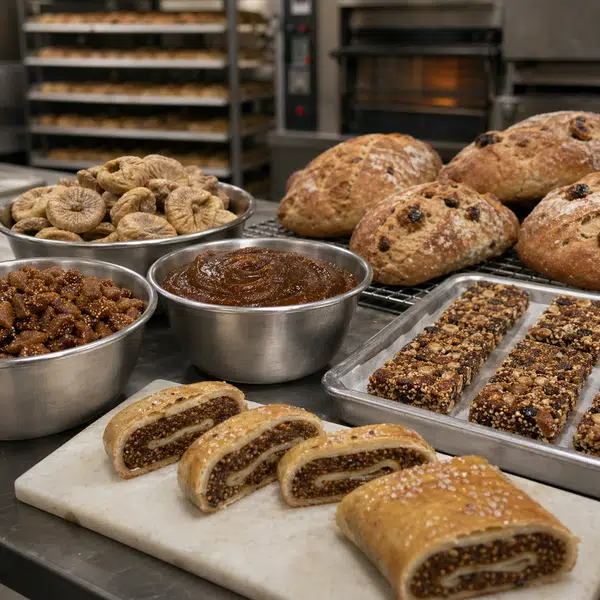
Bakery buyers usually need a more technical dried fig discussion than retail buyers because the ingredient must perform under mixing, forming, filling and baking conditions.
Turkish dried figs are closely associated with Aydin and with a range of commercial formats such as Lerida, Garland, Protoben, diced figs and fig paste. In bakery, however, the deciding factor is not only the origin or the traditional retail format. The more important question is how the fig format behaves in the finished bakery application, whether as a filling, an inclusion, a topping component or a fruit base in a premium baked product.
Dried figs are especially relevant to bakery because they offer natural sweetness, recognizable fruit character, a premium Mediterranean ingredient story and a texture profile that can work well in both indulgent and better-for-you bakery concepts. They can support filled cookies, fruit bars, rolls, artisan breads, premium pastries, bakery snacks and breakfast-bakery hybrids where fruit identity is part of the commercial appeal.
Still, industrial bakery users cannot buy dried figs as a generic fruit ingredient. They need to define whether the requirement is for fig paste for fillings, diced figs for inclusions, larger cut pieces for visible fruit presentation or another industrial format that fits their process. They also need to consider texture, moisture balance, cut stability, bake tolerance, sweetness contribution, line behavior, pack format and annual supply continuity.
That is why a bakery-specific guide is useful. It helps importers, processors and manufacturers evaluate technical fit, commercial suitability and supply structure before moving into quotation, sample approval or annual program planning.
Dried figs can work across several bakery categories, but the format and technical expectation change depending on the product concept.
Fig paste is especially relevant in filled cookies, pastry centers, bakery bars and rolled baked products where smooth texture, spreadability and stable fruit character are required.
Diced figs and controlled cut pieces can be used in breads, snack cakes, breakfast bars and cookies where visible fruit presence adds texture and premium value.
Selected fig cuts can support open pastries, premium flatbreads, artisanal baked goods and seasonal products where fruit visibility helps the final presentation.
Figs work well in fruit-based or fruit-and-grain bars where binding, sweetness support and natural ingredient positioning are commercially valuable.
Whole or larger-format fig use is more niche, but relevant in premium breads, festive bakery products and specialty lines where the fruit itself is part of the selling point.
Dried figs are also used in cleaner-label bakery ranges where fruit sweetness and natural image are important to the final market message.
Format choice usually determines whether the dried figs function well in the process and deliver the intended finished-product result.
Often the most important industrial bakery format. Suitable for fillings, fruit layers, bars and rolled bakery systems where smooth, consistent fruit phase performance matters more than visible whole-fruit identity.
Useful where the bakery concept requires visible fruit distribution, controlled piece size and manageable inclusion behavior in dough, batter or baked snack systems.
Appropriate for premium baked products where larger visible fruit pieces support product differentiation without moving fully into whole-fruit presentation formats.
More selective in industrial bakery, but still relevant in artisan breads, festive bakery items and specialty premium concepts where fruit appearance is central to the finished product.
Some buyers need a process-specific format, especially when a particular filling profile, cut dimension or dough inclusion behavior is required. These should be discussed in relation to the actual bakery line.
Some manufacturers use paste for one line and diced or cut fruit for another. These should be planned as separate product routes within one supply program.
Industrial bakery performance depends on how the fig format behaves before, during and after baking.
Texture is central in bakery use. A paste that is too firm or too loose, or pieces that are too dry or too soft, can disrupt filling consistency, mixing behavior and final product structure.
Moisture affects spread, binding, inclusion stability, handling and finished shelf behavior. If the balance is wrong, the fruit may dry out, stick excessively or compromise dough performance.
For diced or cut fig applications, consistent sizing supports even distribution, cleaner process control and more reliable finished appearance.
Bakery users often evaluate how the figs behave under thermal exposure, whether in filled systems, top applications or inclusions that must maintain integrity through baking.
Figs contribute natural sweetness and fruit depth, but the effect varies by format and dosage. This influences both recipe balance and the commercial positioning of the finished bakery line.
For paste-based applications, buyers often focus on how easily the product fills, spreads, deposits or layers, and whether it holds the intended structure after baking or cooling.
Figs need to work alongside grains, nuts, cocoa, spices, seeds and other fruit components without creating undesirable texture imbalance or process instability.
Bakery manufacturers typically require an appropriate microbiological profile consistent with industrial food processing and the intended product route.
These remain essential, especially where the fruit is visible in open bakery products or where line performance depends on clean incoming raw material.
A useful industrial bakery quotation starts with application detail rather than with a broad dried fig request.
The first point is application type. Buyers should indicate whether the dried figs are intended for cookie fillings, pastry centers, breads, bars, cake systems, visible toppings or another bakery route. The second point is format direction. A request for dried figs alone is not enough when the actual need may be fig paste, diced figs or a controlled larger piece format.
The third point is process expectation. Buyers should define whether they need spreadable filling performance, cut stability in dough, bake tolerance, visible fruit identity or a balance of these attributes. They should also indicate whether the figs will be mixed, deposited, laminated, rolled, baked on top or included in a finished snack bar system. These factors strongly affect sample relevance and quotation logic.
The fourth point is pack and compliance structure. Certification route, industrial pack format, pallet logic and whether the program is organic or conventional all influence the practical offer. The fifth point is annual demand planning. Even an approximate bakery forecast helps Atlas structure a more realistic industrial supply proposal.
Figs can support both formulation goals and premium product storytelling when the right format is matched to the right bakery concept.
Figs help bakery brands create fruit-led sweetness and a more natural ingredient story in premium, wellness or better-for-you lines.
Turkish dried figs bring strong origin recognition and specialty-fruit value that can lift the perceived quality of the finished bakery product.
The same sourcing program may support paste for filled products, diced fruit for bars and larger pieces for premium artisan items.
Figs work well in concepts that sit between bakery, snacking and confectionery, which makes them useful for premium product extensions.
Both routes are viable, but the commercial logic should fit the final bakery concept and market expectation.
Organic dried figs are especially relevant in premium bakery, wellness-focused snack bars, natural pastry concepts and cleaner-label baked goods where certification and ingredient positioning form part of the commercial value. In those programs, buyers often require stronger alignment on certification scope, pack logic and documentation support.
Conventional dried figs are often appropriate where the bakery concept is more cost-sensitive or where the product needs industrial performance without an organic market claim. In those cases, the main commercial issues tend to be format suitability, texture consistency, shipment planning and total delivered competitiveness.
Where a buyer manages both routes, the organic and conventional programs should be separated clearly in specification, forecasting and pack planning so execution remains smooth and channel claims remain clean.
Industrial bakery users usually need packing that protects product quality while supporting clean receiving and practical line-side use.
Suitable for paste, diced material and cut fig formats used in factory environments where the ingredient is transferred into bakery production systems after receipt.
The best pack is not only freight-efficient. It should also suit warehouse handling, lot control and production usage patterns at the buyer site.
Bakery programs generally operate more smoothly when built around forecast or annual demand planning instead of purely urgent spot purchasing.
Most bakery sourcing issues come from vague format definitions or from treating bakery use as identical to general dried fruit buying.
Paste, diced and whole-fruit bakery applications are different industrial needs and should not be treated as one generic inquiry.
Whether the figs are mixed, filled, layered, topped or baked inside a product changes the technical suitability of the ingredient.
Texture balance affects sticking, filling performance, bake stability and overall process cleanliness in bakery systems.
A visually premium whole-fruit grade is not always the right or most economical solution for an industrial bakery process.
Industrial buyers should define how the ingredient will be received and used so the pack format fits the actual factory operation.
Recurring bakery programs usually benefit from annual planning because format continuity and production timing are easier to manage.
A clear technical and commercial brief helps Atlas prepare a more relevant bakery offer.
State whether the product is for breads, bars, pastry fillings, cookies, cake systems, toppings or another bakery route.
Confirm whether the need is for fig paste, diced figs, cut pieces or a selected whole-fruit application.
Describe the preferred texture, filling behavior, cut profile and any important bake or process expectations.
Clarify whether the program is organic or conventional so the product and documentation route can be matched correctly.
Share carton, liner, pallet and delivery expectations so the supply format supports the actual bakery operation.
Indicate whether the inquiry is for trials, pilot runs, a launch program or a recurring annual bakery supply structure.
These points help bakery buyers turn dried figs into a workable industrial ingredient rather than a generic fruit purchase.
The right dried fig format depends on whether the product needs paste performance, visible inclusions, premium pieces or stable bakery filling functionality.
Texture, moisture balance, cut consistency and bake tolerance are central to bakery performance.
A good bakery program aligns the industrial use case with the right dried fig route instead of overpaying for an unsuitable presentation grade.
Bakery users generally achieve stronger continuity and cleaner execution when supply is planned rather than bought only on short notice.
A short checklist helps buyers and suppliers move faster toward a practical bakery quotation.
Confirm the exact bakery use so the correct dried fig format and technical profile can be proposed.
State whether the need is paste, diced, cut or whole-fruit based so quotations are comparable from the beginning.
Share whether the figs will be mixed, filled, layered, topped or baked into the product system.
Define the texture, visual expectation and industrial suitability needed for the finished bakery product.
Clarify carton, liner, pallet and receiving expectations so the supply structure matches the production environment.
State whether the requirement is a sample, a development project, a launch program or a recurring annual volume.
Short answers help buyers review the bakery application topic quickly.
Buyers should first clarify bakery end use, target market, desired format, grade direction, certification profile and preferred pack format.
Because bakery applications have their own technical expectations related to filling behavior, cut stability, dough tolerance, baking performance, sweetness contribution and finished product appearance.
Yes. Industrial bakery programs can support both organic and conventional dried figs when the format, certification scope, quality expectations and packing structure are aligned with the buyer requirement.
The most relevant formats are fig paste, diced figs and controlled cut pieces depending on whether the bakery application requires fillings, inclusions, topping use or visible fruit identity.
Atlas supports bakery buyers who need dried fig programs matched to real industrial processes and commercial objectives.
If your project involves dried figs for breads, pastry fillings, cookies, bars, toppings or premium baked snacks, the most useful next step is to share the intended application, required format, preferred texture direction, certification route and approximate annual volume. That allows Atlas to structure the discussion around the right fig format, realistic packing options and a more practical industrial quotation.
Whether the requirement is for product development trials, a new line launch or a recurring bakery supply program, a clear application brief usually leads to better sample alignment, stronger price comparability and smoother supply continuity.