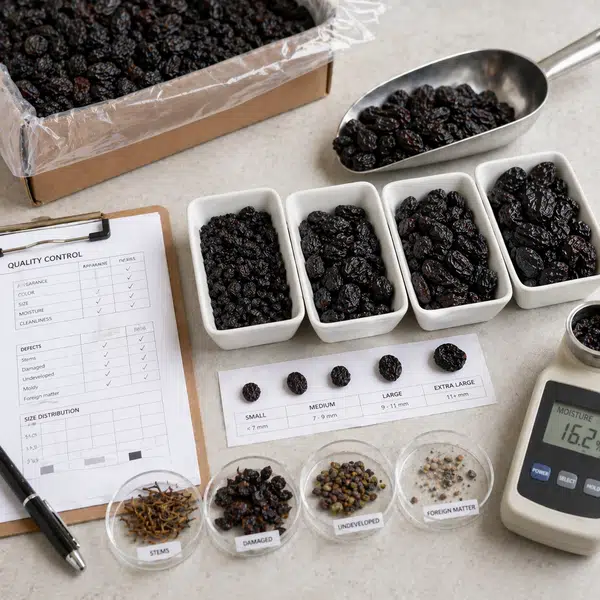
Black raisins serve several value chains at the same time. They can be sold as a premium dark-color snack product, used in bakery and confectionery, packed into trail mixes and breakfast blends, or supplied as an ingredient for further industrial processing. Because of this, buyers rarely benefit from a generic inquiry. They need to define the commercial grade, expected berry size, appearance, moisture style, acceptable defect level, packing format and shipment rhythm before a supplier can prepare a realistic quotation.
Compared with standard light-colored raisin programs, black raisins are often purchased for their stronger visual identity, deeper color impression and more distinctive specialty profile. That makes color consistency and overall visual presentation especially important for retail and snack programs. At the same time, industrial users may place greater emphasis on handling performance, cluster separation, stickiness, moisture management, stem tolerance and processing consistency. These are not the same buying priorities, so the specification should reflect the final use.
Commercially, grades and quality parameters influence more than acceptance at destination. They affect yield, packing efficiency, sorting intensity, container planning, complaint risk and repeat-order stability. A buyer comparing two black raisin offers should therefore look beyond base price and evaluate what is really included in the offered grade: size range, uniformity, cleaning level, visual tolerance, defect expectations, packing type and whether the program is suitable for spot buying or repeat annual supply.
This is why a separate article on grades, sizes and quality parameters is useful. It helps importers, distributors, processors and private label teams build a more precise buying brief, reduce avoidable misunderstandings and compare suppliers on a more commercial and technical basis.