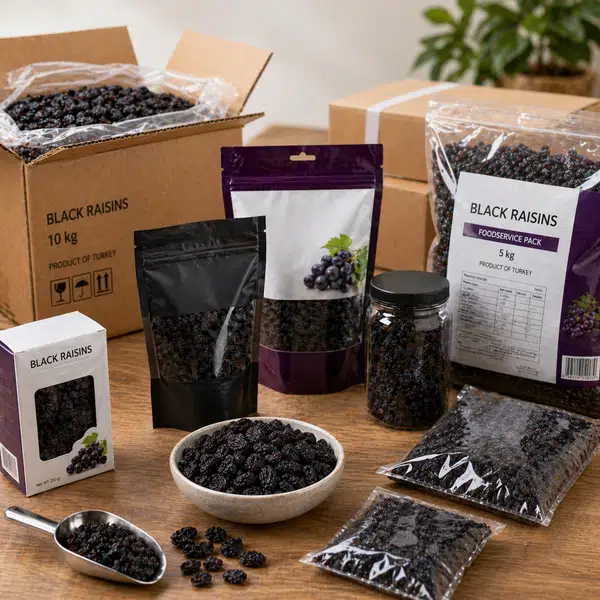
Black raisins can move through several channels, from premium retail packs and private label snack lines to foodservice kitchens, bakery supply and distributor programs. Because the same fruit may be sold in very different ways, packaging should never be treated as a secondary detail. The selected pack format influences how the product looks on shelf, how it performs in transport, how efficiently it is palletized, how quickly it can be packed, and how the final cost structure is built.
For retail programs, packaging is closely tied to shelf presentation, unit price architecture, consumer convenience and label communication. Black raisins are often chosen because of their darker specialty appearance and stronger visual identity, so transparent windows, pouch stability, pack shape and label balance can all affect perceived value. For foodservice and distribution, the priorities usually shift toward pack practicality, faster handling, carton efficiency, easy storage and controlled cost per kilogram.
Commercially, well-structured packaging programs reduce friction across the supply chain. They help buyers align artwork, inner bag format, outer carton configuration, pallet utilization and loading plan before production begins. This matters because packaging material lead times, print approvals, destination labeling rules and container optimization all influence final competitiveness. A supplier discussion becomes much more efficient when the buyer states not only the product requirement, but also the intended pack style, unit weight, shelf channel, pallet expectation and whether the program is for branded retail, foodservice resale or distributor inventory.
A separate packaging guide is therefore useful because it allows importers, distributors, retailers and brand teams to compare format options in a practical way. It connects technical packing choices with real commercial outcomes such as freight efficiency, shelf impact, order flexibility and repeat-program reliability.