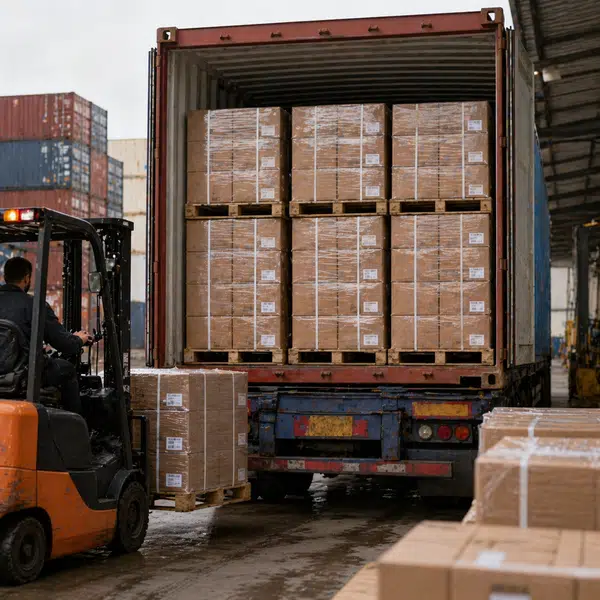
Black raisins are supplied into retail, foodservice, repacking and industrial channels, and each one of these channels expects the product to arrive in commercially usable condition. Even a well-selected lot can underperform if the loading pattern is weak, the packaging is not suited to the route, the pallets are unstable, or the storage conditions after arrival are poorly controlled. That is why container loading, transit and storage should be treated as part of the commercial specification, not as a separate logistics detail handled at the end.
In export trade, black raisins may face long ocean transit, port delays, inland trucking, multiple unloading points and variable warehouse environments. During that period, packaging integrity, pallet stability and sensible storage discipline become essential. Buyers care about arrival condition because it affects saleability, repacking efficiency, retail presentation, inventory life and complaint risk. Importers also care because loading efficiency changes freight economics, while poor unloading condition can create avoidable labor cost and stock losses.
Commercially, good logistics planning supports better continuity. It reduces the chance of crushed cartons, unstable pallets, moisture-related pack deterioration, transit stress and warehouse handling problems. It also improves landed cost visibility because pallet design, carton counts, container utilization and damage-prevention measures all affect total delivered value. A supplier discussion becomes much stronger when the buyer shares not only the product and pack format, but also the route profile, destination climate, expected storage time and the operational conditions at destination.
A dedicated article on container loading, transit and storage advice is therefore useful because it helps buyers evaluate more than the fruit itself. It helps them structure the logistics side of the program so that product quality, packaging performance and commercial value are protected across the full shipment cycle.