Apricot Kernels

Apricot Kernels: Seasonality, Harvest Windows and Crop Planning

A practical buyer and exporter guide covering seasonality, harvest timing, cracking flow, new-crop availability and crop-planning decisions for apricot kernel supply programs.

Supply focusNew crop and carryover
Trade focusPlanning and continuity
Buyer focusIngredient and retail demand
Apricot Kernels: Seasonality, Harvest Windows and Crop Planning

Why this topic matters

Apricot kernel supply is closely connected to the apricot crop itself, so timing is one of the most important commercial variables in the business.

Apricot kernels serve several different value chains, including ingredient use, bakery, confectionery, snack applications, niche retail and selected industrial programs. Unlike some products that can be discussed mainly in terms of grade and price, apricot kernels require stronger timing discipline because supply availability depends on the apricot harvest cycle, pit collection, kernel extraction, sorting and packing flow. For that reason, buyers usually need a more precise conversation than simply asking for a quotation per kilogram.

When discussing seasonality, harvest windows and crop planning, the first commercial question is not only what type of kernel is needed, but also when it will be needed. Sweet and bitter kernel programs, organic and conventional lines, and retail and industrial channels can each have different timing sensitivities. Some buyers need early new-crop access, while others need secure coverage across the full year. Some prioritize immediate availability, while others prioritize price discipline and repeated shipment continuity.

Commercially, well-managed apricot kernel programs are built around crop awareness. Harvest pace, raw material availability, cracking yield, separation of sweet and bitter profiles where relevant, stock carryover, packaging lead times and shipment planning all affect final competitiveness. A supplier conversation becomes much more productive when the buyer shares annual demand, preferred shipment months, required pack format, whether the program is organic or conventional, and whether the objective is spot coverage or planned annual supply.

That is why a dedicated article on seasonality, harvest windows and crop planning is useful. It helps importers, distributors, processors and private label buyers understand when new-crop discussions should begin, how carryover planning works and why early alignment usually reduces supply risk later in the season.
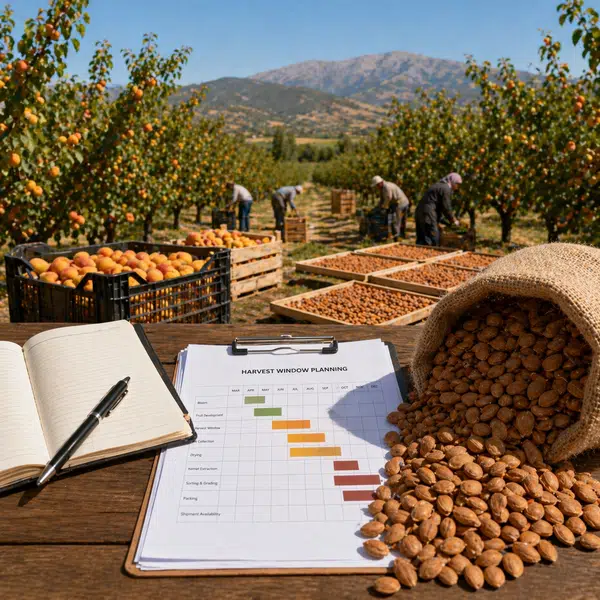
How apricot kernel seasonality works in practice

Apricot kernels are not traded on a flat year-round basis. Their commercial rhythm follows the structure of the apricot season and the post-harvest processing cycle.

Harvest-linked raw material flow

Apricot kernels are derived from apricot pits, so their supply begins with the apricot harvest itself. This means kernel availability is structurally tied to the pace, quality and size of the underlying apricot crop. A strong fruit harvest can support stronger kernel availability, while crop pressure can tighten supply expectations.

Post-harvest cracking and sorting period

After the apricot season, kernel supply does not become instantly available in finished commercial form. There is a practical sequence of pit handling, cracking, sorting, selection and packing. Buyers planning new-crop purchases should therefore understand that “harvest” and “shipment readiness” are related but not identical stages.

New-crop offer window

Early new-crop discussions often begin before full commercial packing momentum is reached. At this stage, buyers may focus on crop outlook, expected availability, likely grade profile and indicative commercial direction rather than only immediate shipment offers.

Carryover and later-season planning

Once the main new-crop flow is established, supply programs move into stock management and carryover planning. At that point, buyers are evaluating continuity, remaining availability, price behavior and whether they need to secure later-season coverage before the market tightens.

Why harvest windows matter commercially

Harvest windows shape not only availability, but also pricing behavior, packing schedules and the flexibility of supplier commitments.

Early-season planning: Buyers who engage early usually gain better visibility on crop direction, likely quality profile and initial supply positioning. This is especially important for programs requiring organic certification, selected grades, fixed pack formats or repeated shipments over several months.

Fresh-crop access: Some buyers prefer to work as close as possible to the new crop because it aligns with their internal planning, product launches or customer expectations. In these cases, harvest timing matters because raw material transition and packing readiness must be coordinated carefully.

Specification matching: Kernel supply is easier to structure when the buyer defines required type, grade and timing before the crop is fully committed elsewhere. Late requests for narrowly defined profiles can be more difficult to fulfill smoothly if the season has already advanced.

Budget and contract planning: For annual or multi-shipment buyers, understanding the harvest window helps determine whether the program should be contracted earlier, partially covered in stages or left more flexible. The right choice depends on the buyer’s risk tolerance and demand pattern.

Logistics synchronization: Crop timing also affects processing queues, packaging readiness, container planning and the availability of shipment slots. That is why a practical crop conversation supports better logistics planning later on.

Main crop-planning topics buyers should review

A strong apricot kernel program is usually built around a few practical planning questions rather than around spot price alone.

Kernel type

Buyers should define whether the requirement is for sweet apricot kernels, bitter apricot kernels or a specific application-linked profile. This affects sourcing route, commercial positioning and available volume structure.

Program horizon

The supplier should know whether the buyer is planning a trial order, a seasonal campaign, a recurring monthly schedule or a full annual supply arrangement.

Grade profile

Grade, appearance, size style and defect tolerance should be aligned early because later-stage tightening of specifications can be commercially difficult once the crop has been allocated.

Organic versus conventional flow

Organic programs may need earlier alignment because certified raw material flow, segregation and documentation logic add another layer to crop planning.

Shipment rhythm

Some buyers want concentrated seasonal shipments, while others need spread deliveries over several months. The shipment pattern affects how stock should be reserved and packed.

Carryover tolerance

Some customers are comfortable with structured carryover supply when the product remains commercially sound, while others strongly prefer the newest available crop phase. This should be clarified at the start.

New crop versus carryover supply

Understanding the difference between new-crop availability and carryover planning helps buyers build more realistic purchase strategies.

New-crop supply logic

New crop usually attracts attention because it sets the tone for the season. Buyers often review crop outlook, likely quality range, cracking pace, early sorting results and expected commercial positioning. New-crop discussions are especially important for customers who plan early promotions, annual contracts or branded launches.

Carryover supply logic

Carryover can play an important role in maintaining continuity between crop cycles or in covering later-season demand. The key issue is not simply whether stock is carryover, but whether it has been handled, packed and stored in a way that remains commercially suitable for the intended use and destination market.

When buyers prefer fresh-crop timing

Retail, premium and label-sensitive programs may place more emphasis on fresh-crop alignment because they value strong market positioning, clearer crop messaging and tighter program control from the beginning of the season.

When carryover planning makes sense

Industrial and ingredient users sometimes prioritize continuity and functional suitability over immediate fresh-crop timing. In these cases, a well-managed carryover plan may be commercially sensible if the stock remains aligned with the required specification.

Why annual planning often works better than spot buying

Spot buying can be useful, but buyers with repeated demand often gain better control when they plan around the crop cycle.

Pure spot buying can sometimes work for opportunistic purchasing or short-term coverage, but it is less effective for buyers who need repeated shipments, consistent grade matching or stable packing formats over time. Apricot kernels are better managed when demand is mapped against the season. This allows suppliers to advise on crop timing, reserve appropriate stock positions, plan packaging materials and align logistics without last-minute pressure.

Annual or seasonal planning is particularly useful when the buyer has fixed customer commitments, regular production needs, private label requirements or a narrow specification window. Earlier planning can also improve coordination for organic programs, where certified availability and paperwork flow may require more deliberate timing than conventional supply.

From a commercial perspective, planning does not always mean locking every detail immediately. It can also mean phasing the program properly: defining likely annual volume, identifying key shipment periods, setting the specification early and then scheduling releases in a structured way as the crop and sales program evolve.

Typical crop risks buyers should consider

Good crop planning is not about predicting everything perfectly. It is about identifying the commercial risk points early enough to respond sensibly.

Crop-size uncertainty

The size of the apricot crop influences kernel availability and commercial confidence. Buyers with larger programs should therefore avoid assuming that every season will offer the same flexibility or pricing structure.

Processing pace after harvest

Even when the crop looks promising, commercial shipment timing still depends on how quickly pits are handled, kernels are cracked, selected and prepared for market.

Narrow specification risk

Very tight size, appearance or pack requirements can be harder to support smoothly if the request is made late in the season or after the most suitable lots are already committed.

Late organic planning

Organic programs can face more pressure if buyers wait too long to align certification profile, pack format and likely shipment rhythm against available crop flow.

Underestimating logistics lead time

Crop planning should include packaging procurement, container scheduling, inspection timing and documentation preparation, not just raw kernel availability.

Over-reliance on one buying moment

Some programs benefit from staged coverage rather than relying on a single decision point. This is especially relevant when the buyer needs year-round continuity.

What buyers should define before requesting a quotation

A detailed planning brief makes crop-based sourcing conversations much more productive.

Product brief

Confirm whether the requirement is for sweet or bitter apricot kernels, and whether the program is conventional or organic.

Use brief

State whether the kernels are intended for ingredient use, retail packing, foodservice, further processing or private label sale.

Timing brief

Share required shipment months, whether new crop is preferred and how much flexibility exists around timing.

Volume brief

Provide approximate seasonal or annual demand so the supplier can advise whether spot supply or planned reservation is more appropriate.

Specification brief

Clarify grade, appearance, kernel type, packing format and any technical or certification-related expectations that affect availability planning.

Program brief

Indicate whether the inquiry is for a sample, trial container, repeat monthly schedule or annual contract-based supply arrangement.

Commercial implications of seasonality awareness

Buyers who understand the crop cycle usually make stronger purchasing decisions and reduce avoidable supply pressure later on.

Seasonality awareness improves more than timing. It improves quotation quality, expectation management and supply continuity. When buyers align their demand with the crop cycle, suppliers can recommend whether to buy early, stage coverage, reserve stock or plan rolling shipments. This usually produces a more stable commercial discussion than waiting until the market is already tight and then asking for immediate availability under narrow conditions.

It also improves price comparability. Two offers may look similar, but one may be built on a better-timed position, stronger new-crop visibility or more workable carryover planning. For importers and industrial users, that can reduce hidden operating cost and improve confidence across the season.

In practical trade terms, crop planning is not unnecessary complexity. It is simply the discipline of matching demand to how apricot kernels actually become available. Buyers that do this well tend to experience fewer surprises, smoother logistics and stronger supplier relationships.

Key takeaways

These points make the article immediately useful for importers, processors, distributors and ingredient buyers.

Apricot kernels are strongly crop-linked

Supply timing follows the apricot harvest, pit handling and kernel processing sequence, so seasonality should be part of every serious purchasing discussion.

Harvest and shipment readiness are not identical

Buyers should allow for the practical time needed between fruit harvest and commercially ready kernel supply.

Early planning usually improves continuity

Programs with repeated demand often benefit from earlier seasonal alignment rather than relying only on spot offers.

New crop and carryover should be discussed openly

The right supply strategy depends on end use, timing preference, stock horizon and the buyer’s tolerance for phased coverage.

Organic planning may need earlier coordination

Certified programs usually work best when crop timing, segregation and documentation needs are considered from the start.

Better crop awareness supports better quotations

A clear brief on volume, timing and format helps suppliers advise more accurately on availability, packing and shipment structure.

Commercial discussion checklist

A structured checklist helps buyers and suppliers move from a general crop inquiry to a workable supply program.

Product brief

Confirm sweet or bitter kernel type, organic or conventional status and the intended sales or usage channel.

Timing brief

State preferred shipment months, new-crop preference and whether the program needs immediate or phased coverage.

Volume brief

Share trial volume, seasonal estimate or annual requirement as early as possible so realistic planning can begin.

Specification brief

Clarify grade, appearance, pack format and any certification or documentation needs that could influence sourcing timing.

Program brief

Indicate whether the inquiry is for a spot lot, repeat order flow, seasonal contract or annual supply arrangement.

Risk brief

Explain how much flexibility exists on shipment timing, carryover acceptance and staged purchasing so the supplier can structure better advice.

Mini FAQ

Short answers on apricot kernel seasonality, harvest windows and crop planning.

What should buyers clarify first for apricot kernels?

Buyers should first clarify end use, sweet or bitter kernel type, target market, grade, certification profile, packaging format and expected shipment rhythm.

Why create a separate article for seasonality, harvest windows and crop planning?

Because apricot kernels are closely linked to the apricot harvest cycle, and crop timing affects new-crop availability, carryover planning, packing schedules, price structure and annual supply continuity.

Can this topic support both organic and conventional programs?

In many cases yes, provided the kernel type, sourcing program, certification profile and processing flow are aligned with the customer requirement and the available crop.

Why does crop timing matter so much for apricot kernels?

Because kernel supply depends on the apricot harvest and cracking flow, so crop timing influences raw material availability, processing pace, fresh-crop offers, carryover quality and shipment planning.

Should buyers rely only on spot offers?

Not usually. For steady ingredient or retail demand, annual or seasonal planning often gives better continuity, clearer specification matching and more stable supply management than purely spot buying.

What is the difference between new crop and carryover supply?

New crop refers to the latest season’s kernel flow after harvest and processing, while carryover refers to remaining stock planned and managed beyond the first main crop window. The right choice depends on application, timing and commercial objectives.

Quick Contact