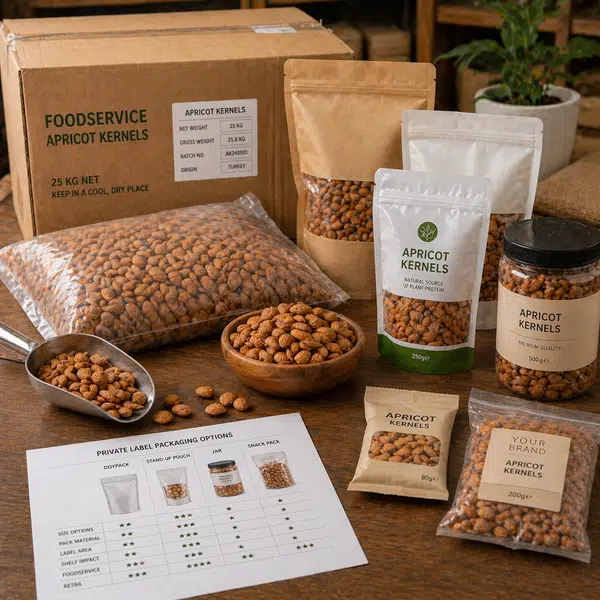
Apricot kernels can sit in several value chains at once, from ingredient and industrial use to foodservice distribution, specialty retail and private label programs. Because of that, buyers usually need a clearer conversation than simply asking for a price per kilogram. They need to define the kernel type, end use, target market, acceptable appearance, pack style and shipment rhythm before the right commercial offer can be structured properly.
When discussing foodservice and retail packaging, the first question is channel fit. Foodservice buyers usually care about efficient storage, repeated opening and use, durable outer packing, traceable labeling and practical handling in kitchens, bakeries or professional distribution systems. Retail buyers usually care more about shelf presentation, consumer-facing pack size, brand communication, barcode placement, legal label accuracy and whether the packaging supports premium or mainstream market positioning.
Commercially, successful apricot kernel programs are built around timing and specification discipline, but also around packaging logic. Crop timing, carryover structure, pack material choice, carton design, pallet planning, destination requirements and label execution all affect final competitiveness. A supplier conversation becomes much smoother when buyers share annual demand estimates, intended channel, pack size expectation and whether the requirement is for conventional or organic, bulk, foodservice, private label or finished retail sale.
This article helps importers, distributors, foodservice operators and retail brand teams compare packaging approaches before starting a program. It also shows why foodservice and retail packs should not be treated as interchangeable even when the apricot kernels themselves come from the same supply base.